All recipes are for 2 servings unless noted. Oil is canola oil and salt is kosher salt.
Showing posts with label eggs. Show all posts

2019-04-29

Taiwan-fu tamago kureepu / dan bing / Taiwanese egg crepes

Found both on the street and at specialty takeout & eat-in eateries, egg crepes with various fillings are one of the many breakfast choices in Taiwan. Dan bing with ham was my usual choice at an eatery near my work. The crepes presented here are adapted from a Japanese translation of a Taiwanese cookbook by Zhou Qingyuan (周清源). To lower sodium content, I skip the salt and use cold milk instead of cold water. Below is my current favorite combination with alderwood smoked salmon, a Pacific Northwest specialty, and Thai basil with a note of anise.

Whole recipe (2 dan bing egg crepes with fillings, without dipping sauce):
533 calories; 22.9 g protein; 20.4 g fat; 59.7 g carbohydrate; 56.9 g net carbs; 269 mg sodium; 427 mg cholesterol; 2.8 g fiber

2018-05-14

Shoyu raamen / ramen with soy sauce flavored soup

One of the standard ramen noodle variations in Japan comes with soy sauce flavored broth. Here is a tasty example topped with asparagus and eringi saute for spring and early summer. A combination of homemade chicken stock with a soft ginger aroma and niboshi-kobu-shiitake dashi (dried young sardine, kelp & dried shiitake stock) provides a flavorful underlying tone.


Proportion of seasonings was figured out backwards, starting from total sodium figures and the salt level needed to ensure tasty results, and it did work like magic after several trials and adjustment. Once you get the right proportion of seasonings, this is pretty simple to make and satisfies your taste buds.


1/2 of recipe:
427 calories; 18.2 g protein; 5.9 g fat; 74.7 g carbohydrate; 8.4 g net carbs; 500 mg sodium (with koikuchi shoyu regular soy sauce & shoyukoji made with 50% reduced-sodium soy sauce); 27 mg cholesterol; 5.3 g fiber; 450 mg potassium

2018-03-29

Koyadofu-iri seri to koebi no chijimi / jijigmae Korean savory pancake with freeze-dried tofu, water dropwort and bay shrimp

An easy fix when feeling like eating lots of vegetables, especially strong-tasting greens. For the batter below, koyadofu freeze-dried tofu along with ground okara soybean pulp are added to partially replace wheat flour and lower net carbs. Koyadofu's fat content contributes to a rich taste, while at the same time grating the freeze-dried tofu makes the batter light and airy. It also makes pancake surfaces toastier. But be patient when cooking -- wait to flip pancakes until their bottom surface has turned opaque and shows some golden color at edges, otherwise they tend to crumble in the air.


1/2 recipe (pancake only; dipping sauce not included)
496 calories per serving; 32.2 g protein; 22.4 g fat; 40.5 g carbohydrate; 33.6 g net carbs; 198 mg sodium; 307 mg cholesterol; 6.9 g fiber; 962 mg potassium

2018-03-15

Chawanmushi / steamed savory custard

Heavenly soft custard that quickly disappears on your tongue after releasing its umami-packed flavor. When serving only a small number of people, chawanmushi is easy to make in a regular pot or deeper pan with lid. Finishing with a smooth surface and no obvious holes is the sign of extra silky texture; for this, cook at low heat once water starts to bubble and the pot is filled with steam! While all solid ingredients can be immersed in the egg-dashi mixture, shrimp is placed after custard has basically solidified so that it stays on top along with mitsuba leaves and yuzu peel, the aromatic garnishes.


1/2 of recipe:
66 calories; 7.7 g protein; 2.7 g fat; 2.2 g carbohydrate; 1.8 g net carbs; 210 mg sodium; 125 mg cholesterol; 0.4 g fiber

2018-01-27

Ninjin no shirishiri / stir-fried shredded carrot with eggs

A tasty everyday dish from Okinawa that has been gaining popularity across Japan in recent years. Slowly sauteing carrots with a small amount of oil enhances the sweetness of the vegetable, and eggs add a gentle, rich taste. Among a number of variations, canned tuna is often mentioned as an addition. The recipe below features okara-konnyaku (soybean pulp yam cakes) to make the dish more filling as well as snow peas for color.


1/2 recipe:
115 calories; 6.1 g protein; 5.4 g fat; 11.2 g carbohydrate; 5.1 g net carbs; 128 mg sodium (with 50% reduced-soy sauce and shoyukoji made with 50% reduced-sodium soy sauce; 106 mg cholesterol; 6.1 g fiber

2017-08-29

Tosho chaamen / dao xiao chao mian / fried hand-shaven noodles

A cheater version of hand-shaven noodles made with a peeler, and stir fried with an assortment of goodies. Noodle dough is basically the same as teuchi udon handmade wheat noodles but uses less water, which makes the dough prep a bit more time consuming (dry and wet ingredients need to rest together longer before kneading). Less water in turn ensures easy shaving and cooking at the end. While any goodie works great in this noodle dish, dried shiitake mushrooms with their deep flavor and aroma function like underlying seasoning to bind everything together. Very tasty and satisfying.


1/2 recipe: 
596 calories; 26.6 g protein; 15.0 g fat; 85.8 g carbohydrate; 73.1 g net carbs; 595 mg sodium (with 50% reduced-sodium soy sauce and shoyukoji made with 50% reduced-sodium soy sauce); 226 mg cholesterol; 6.1 g fiber

2017-08-18

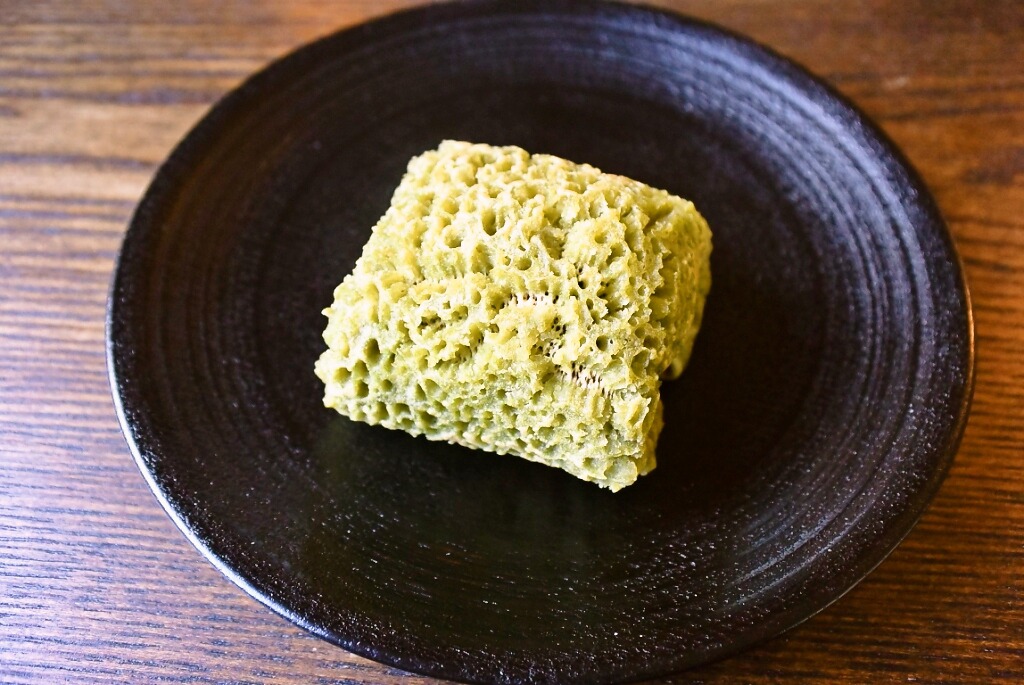
Chabukusa, matcha-aji / crepe wrapper cake, matcha flavor

Also called tsuyabukusa or fukusa, this little cake tastes similar to everyday dorayaki or taiyaki. The sea sponge look is not just unique; the air pockets lighten the cake's chewy texture. With this matcha version, the delightful aroma of green tea fills your mouth as you take a bite.

This is fun to make. The batter you spread on the hot pan quickly produces air bubbles, which you gently rub or touch with paper or cloth to open up and make craters.  Keep the heat level relatively high for the best bubbling results.


1 cake (1/5 of recipe):
110 calories; 3.2 g protein; 1.0 g fat; 21.5 g carbohydrate; 19.8 g net carbs; 23 mg sodium; 21 mg cholesterol; 1.7 g fiber

2017-05-17

Gomadashi udon / wheat noodles with fish sesame paste

Gomadashi udon is simply wheat noodles, fish sesame paste, a garnish and plenty of hot water. It is amazingly simple to prepare, as it was originally developed as a quick warm dish for fishermen coming back from the ocean. To satisfy our taste buds with a smaller amount of reduced-sodium version gomadashi, I use a small amount of dashi instead of hot water and add other goodies for overall umami enhancement and color to stimulate the appetite. This is one of Tom's recent favorites.


1 serving (with 150 g fresh low-sodium udon noodles):
575 calories; 22.6 g protein; 13.6 g fat; 87.9 g carbohydrate; 80.8 g net carbs; 460 mg sodium (with reduced-sodium gomadashi); 118 mg cholesterol; 7.1 g fiber 

1 serving (without udon noodles):
191 calories; 12.8 g protein; 11.0 g fat; 11.6 g carbohydrate; 7.3 g net carbs; 450 mg sodium (with reduced-sodium gomadashi); 115 mg cholesterol; 4.3 g fiber

2017-02-12

Okara-iritamago no okaka mazegohan / steamed rice with scrambled soybean pulp, egg and bonito flakes

An easy makeover of plain steamed rice into a tasty comfort meal. Scrambled eggs fluffed up with fiber-rich okara increase the overall volume of rice, so even one-third of the entire recipe is quite filling. Mild okara-egg is balanced with the strong taste and aroma of okaka or katsuobushi bonito flakes. Although forms are totally different, onigiri rice balls came to mind when I first tasted this rice. Yummy!


1/3 of recipe:
229 calories; 6.6 g protein; 3.5 g fat; 40.4 g carbohydrate; 38.9 g net carbs; 41 mg sodium; 72 mg cholesterol; 1.5 g fiber

1/2 of recipe:
343 calories; 9.9 g protein; 5.2 g fat; 60.6 g carbohydrate; 58.4 g net carbs; 61 mg sodium; 108 mg cholesterol; 2.2 g fiber

2016-04-19

Nitamago / flavored soft-boiled eggs

A popular topping for ramen noodles! These eggs are also tasty on their own, in addition to working well as a topping for other types of noodles or steamed rice and as part of a salad (one of key components or as dressing). The recipe below involves slow flavoring in the fridge, where eggs are ready starting on Day 2 and lasting at least to Day 6.


83 calories (1 egg); 6.6 g protein; 5.3 g fat; 1.4g carbohydrate; 1.2 g net carbs; 115 mg sodium (with 50% reduced-sodium soy sauce and shoyukoji made of 50% reduced-sodium soy sauce); 214 mg cholesterol; 0.2 g fiber; 74 mg potassium 

2016-03-15

Kinoko-iri sundupu / soondupu jjigae Korean soft tofu stew with mushrooms

A tasty Korean soft tofu stew has made a comeback at our table! My now typical lineup of seasonings to reduce overall sodium -- shoyukoji soy sauce rice malt, shiokoji salted rice malt and (brown) rice vinegar -- works like a charm again here. The strong taste and aroma of dashi stock made of niboshi dried young sardines and konbu kelp is softened to a deeper note by adding the water used to rehydrate dried shiitake, which is one of assorted mushrooms that go into the stew. All in all, this is very satisfying, filling dish.


248 calories (1/2 of recipe); 18.9 g protein; 13.9 g fat; 16.1 g carbohydrate; 10.1 g net carbs; 574 mg sodium; 219 mg cholesterol; 6.0 g fiber

2016-02-03

Oden (genen) / fishcake, tofu and root vegetable stew (reduced-sodium version)

An unbeatable comfort food in cold seasons! The original version had the major drawback of being loaded with sodium, but the dish is finally ready to be re-introduced at our table. Major differences are making the dashi stronger by additionally using niboshi young dried sardines for a powerful base, reducing the amount of sake, desalinating fishcakes, using reduced-sodium soy sauce, and partially replacing soy sauce with rice vinegar as well as substituting shiokoji salted rice malt for some salt. Each change may be minor, but the outcome is surprisingly low in sodium and of course very tasty!


535 calories (1/4 of recipe); 34.4 g protein; 28.7 g fat; 38.9g carbohydrate; 31.4 g net carbs; 282 mg sodium (with 50% reduced-sodium soy sauce); 286 mg cholesterol; 7.5 g fiber

2015-09-09

Okara to kinoko-iri kabocha no korokke / pumpkin croquettes with soybean pulp and mushrooms

Savory and sweet pumpkin croquettes. Sauteed enoki and eringi mushrooms are added for a slightly earthy, deep taste and aroma, which nicely disguises the low sodium content of the dish. The deep-fried version with crispy panko bread crumbs is quite satisfying even when eating only one or two pieces. The baked version tastes light and significantly cuts down the amount of oil and calories. The baked version involves a bit of a process to prepare panko, but it can be done ahead of time.


Deep-fried version (1/2 of recipe):
391 calories; 6.5 g protein; 26.4 g fat; 32.9 g carbohydrate;  25.0 g net carbs; 90 mg sodium (with shoyukoji made with 50% reduced-sodium soy sauce); 27 mg cholesterol; 7.9 g fiber

Baked version (1/2 of recipe):
202 calories; 6.5 g protein; 6.0 g fat; 32.9 g carbohydrate; 25.0 g net carbs; 90 mg sodium (with shoyukoji made with 50% reduced-sodium soy sauce); 27 mg cholesterol; 7.9 g fiber

2015-09-06

Kyuri to kinshitamago no osuimono / clear soup with Japanese cucumber and julienned egg crepe

A pleasant soup with julienned cucumber and egg crepe that goes well with somewhat heavy, substantial dishes. Kinshitamago below is made by microwaving for easy preparation. Once the cucumber and egg crepe are cut, this soup can be made very fast. Sound good? For the best outcome, make sure to have other dishes nearly ready when you start making this soup so that it can be served hot with vivid green cucumber.


1/2 of recipe:
54 calories; 4.3 g protein; 2.7 g fat; 2.6 g carbohydrate; 2.2 g net carbs; 253 mg sodium; 107 mg cholesterol; 0.4 g fiber

2015-07-16

Takoyaki / fried octopus dumplings (calamari version)

Served with an aromatic, sweet and salty sauce that blends with the savory and still creamy batter inside, these little dumplings are everyone's favorite. Takoyaki used to be something from neighborhood mom & pop shops, which often had small eat-in areas but largely sold takoyaki as a takeout item. At my local takoyaki shop, a couple of coins were enough to buy a small tray with several takoyaki, which was affordable with my pocket money -- basically change I collected from buying stationery or books -- as a child. Buying a large tray with 12 takoyaki required some help from parents or relatives, and I always dreamed about getting a large tray with 12 takoyaki and eating them all myself. When this dream came true I was so happy, but also uncomfortably full and feeling guilty about not sharing them with my sister.

The recipe below features calamari as a more widely available substitute for octopus.


Whole recipe (about 24 takoyaki balls):
902 calories; 44.8 g protein; 19.0 g fat; 117.2 g carbohydrate; 112.6 g net carbs; 862 mg sodium (with 50% reduced-sodium soy sauce); 734 mg cholesterol; 4.6 g fiber

1/2 of recipe (about 12 takoyaki balls):
451 calories; 22.4 g protein; 9.5 g fat; 58.6g carbohydrate; 56.3 g net carbs; 431 mg sodium (with 50% reduced-sodium soy sauce); 367 mg cholesterol; 2.3 g fiber

2015-04-25

Ebi-iri tanuki donburi / shrimp and tempura pearls over steamed rice

At our house, we call this "fake tendon." Tempura pearls perform the wonderful trick of transforming this sober combination into a rich, filling dish. Add the pearls right before the egg to enjoy some crunch in the final dish as below, or add them at the same time as shrimp for mellower results.


1/2 of recipe above when served with 150 g steamed rice:
379 calories; 15.1 g protein; 4.6 g fat; 65.0 g carbohydrate;
63.6 g net carbs; 301 mg sodium (with homemade tempura pearls and 50% reduced-sodium soy sauce; 497 mg with regular soy sauce); 157 mg cholesterol; 1.4 g fiber

2015-03-27

Kamatama udon / hot wheat noodles with egg and soy sauce

The udon-version equivalent of tamago-kake gohan! The dish is as simple as its rice counterpart but with more variety, because of the endless possibilities of toppings. This one is kama-age udon, where udon noodles are not chilled (and reheated) after boiling. The method naturally leaves the surface of udon slightly rough, which lets noodles mingle with sauce better for a richer taste. Toppings for kamatama udon (kama-age udon with egg) can be as minimal as chopped green onion or as elaborate as including mentaiko spicy salted pollack roe, nori seaweed, cheese, and so on. Below is our favorite, a simple combination of green onion, chives, toasted white sesame seeds and agetama tempura pearls.   


1/2 of recipe:
451 calories; 12.2 g protein; 8.7 g fat; 73.6 g carbohydrate; 70.7 g net carbs; 798 mg sodium (with nama shoyu fresh soy sauce; 701 mg with 50% reduced-sodium soy sauce; 857 mg with regular soy sauce); 210 mg cholesterol; 2.9 g fiber

2015-02-06

Nasu no yanagawa-fu / simmered eggplant and burdock root with egg

Very satisfying! The creamy eggplant is a huge plus. As the eggplant is deep-fried, this is substantial enough to be served as a main dish. Good as is, and it can also be served on top of steamed rice as a donburi dish.


1/2 of recipe:
258 calories; 6.3 g protein; 19.3 g fat; 12.7 g carbohydrate; 8.1 g net carbs; 302 mg sodium (with 50% reduced-sodium soy sauce; 537 mg with regular soy sauce); 109 mg cholesterol; 4.6 g fiber

2015-01-28

Amazake-iri sobako pankeeki / buckwheat pancakes with amazake

More filling than they look, these small pancakes are sugar free and take advantage of buckwheat and amazake for health benefits. The soft sweetness of amazake made from brown sweet rice makes this pancake a natural with syrup and fruit or as a plain pancake to accompany savory dishes.


1/2 of recipe:
445 calories; 13.8 g protein; 10.4 g fat; 72.7 g carbohydrate; 70.4 g net carbs; 84 mg sodium (with milk; 74 mg with soy milk); 224 mg cholesterol; 2.3 g fiber

2015-01-19

Fuki no to-iri iritamago / scrambled egg with Japanese butterbur buds

An easy way to enjoy the bitterness of early spring. While plain-tasting oil is the usual choice for iritamago scrambled eggs, below it is cooked with toasted sesame oil for extra aroma. Oil and eggs soften the bitterness in general, yet fuki no to butterbur buds can be overwhelmingly bitter, depending on climate, time from harvest, etc. If unsure, first try only half of the specified amount, or soak them in water for at least one hour (or blanch if in a hurry; see Notes). Iritamago can be served as is. The photo below shows my favorite way -- a topping for plain steamed rice.


1/2 of recipe (steamed rice excluded):
92 calories; 6.6 g protein; 6.3 g fat; 1.5 g carbohydrate; 5.7 g net carbs; 116 mg sodium; 214 mg cholesterol; 0.6 g fiber