All recipes are for 2 servings unless noted. Oil is canola oil and salt is kosher salt.
Showing posts with label reduced sodium. Show all posts

2019-10-20

Biitsu beeguru / beet bagels

Confectionery sweet, according to my family in Japan. Pureed baked beet is added to the dough for a colorful hue. When made into bagels, the pureed beet has no earthy overtone that some people are not very fond of. Orange peel bits give a fruity note, which pairs well with beets. As with kale and walnut bagels, these reddish bagels also are on the smallish side and have much less sodium than regular commercial versions.


1 bagel (1/8 recipe; 75 g baked):
203 calories; 6.3 g protein; 0.9 g fat; 41.5 g carbohydrate; 38.1 g net carbs; 99 mg sodium; 0 mg cholesterol; 3.4 g fiber

2019-10-17

Daikon to ika no misoni / daikon radish and calamari simmered in miso-flavored broth

The humble daikon takes on the flavor of calamari, becoming something gentle yet deeply aromatic. This is my mom's kind of dish, which I grow to like as I get older. While miso paste typically is the only main seasoning, modifying the dish to reduce sodium content by partially replacing miso with sakekasu sake lees, kurozu brown rice vinegar and shoyukoji soy sauce rice malt successfully results in a pleasantly mild flavor that lets you unwind after a busy day. If a bit of extra flavor is wanted, add grated ginger for a zesty punch or taka no tsume red chili pepper for picante heat.


1/2 of recipe:
125 calories; 12.2 g protein; 1.3 g fat; 11.4 g carbohydrate; 10.1 g net carbs; 155 mg sodium (with 50% reduced-sodium soy sauce); 163 mg cholesterol; 1.3 g fiber

2019-09-19

Nagaimo no acharazuke / Chinese yam pickled in spicy sweetened vinegar

By simply adding taka no tsume red chili pepper to sweetened vinegar, you have another standard marinade for pickles. Fresh nagaimo Chinese yam stays relatively crisp in the marinade, and by Day 2 it becomes a bit milder although still offering some crunch and piquant sensation. As the pickle name's origin -- achar -- suggests, it pairs very well with a number of cuisines beyond Japanese dishes.


Whole recipe (nagaimo only):
60 calories; 2.0 g protein; 0.3 g fat; 12.9 g carbohydrate; 12.0 g net carbs; 2.8 mg sodium; 0 mg cholesterol; 0.9 g fiber

1/4 of recipe (nagaimo only):
15 calories; 0.5 g protein; 0.07 g fat; 3.2 g carbohydrate; 3.0 g net carbs; 0.7 mg sodium; 0 mg cholesterol; 0.2 g fiber

Marinade whole recipe (with shiokoji, erythritol and stevia):
32 calories; 0.2 g protein; 0.02 g fat; 5.3 g carbohydrate; 3.0 g net carbs; 98 mg sodium; 0 mg cholesterol; 0.02 g fiber

2019-09-10

Tsusuna to atsuage no oisutaasoosu itame / stir-fried New Zealand spinach and deep-fried tofu with oyster sauce

A quick stir-fry with tsuruna New Zealand spinach that takes advantage of aromatic oyster sauce to mask the vegetable's slightly earthy taste. Atsuage deep-fried tofu makes this dish somewhat substantial.

1/2 of recipe:
109 calories; 8.3 g protein; 7.0 g fat; 3.1 g carbohydrate; 1.3 g net carbs; 102 mg sodium (with 50% reduced-sodium soy sauce); 0.04 mg cholesterol; 1.8 g fiber; 256 mg potassium

2019-09-05

Mabbuha / matbucha / stewed bell pepper and tomato salad

A bit fruity, sweet, sour and picante with a creamy texture. While it goes with many kinds of dishes, I like pairing it with an eggplant omelet for breakfast.
This is a recent WOW dish for me, and something I make repeatedly to have on hand. Adapted from a recipe by Ta-im, an Israeli restaurant in Tokyo, published in Ryori Tsushin [The Cuisine Press] May 2018 issue.


Whole recipe:
309 calories; 6.4 g protein; 25.0 g fat; 34.5 g carbohydrate; 2.7 g net carbs; 287 mg sodium; 0 mg cholesterol; 10.7 g fiber

1/6 recipe:
52 calories; 1.1 g protein; 4.2 g fat; 6.1 g carbohydrate; 2.7 g net carbs; 48 mg sodium; 0 mg cholesterol; 1.8 g fiber

1/8 recipe:
39 calories; 0.8 g protein; 3.1 g fat; 4.6 g carbohydrate; 2.7 g net carbs; 36 mg sodium; 0 mg cholesterol; 1.3 g fiber

2019-09-02

Kabu no shinodamaki / Japanese turnip rolled in thin deep-fried tofu, simmered in broth

Usuage thin deep-fried tofu wrappers absorb the flavor of dashi-based broth and kabu turnip, and each bite fills your mouth with the tasty broth along with the almost creamy texture of kabu. The oil content of usuage, although reduced almost 30% in the prep process, gives this simple combination more than enough richness.


1/4 of recipe (without grilled shishito): 
29 calories; 1.4 g protein; 1.1 g fat; 3.1 g carbohydrate; 2.4 g net carbs; 142 mg sodium; 0 mg cholesterol; 0.7 g fiber 

2019-07-16

Petoraaru karei no yuanyaki / grilled yuan-marinated petrale sole

This is one of my favorite ways to eat white-fleshed fresh fish. The marinade is a simple mixture of soy sauce, mirin and sake in equal parts, which gives the fish a slightly salty sweet note. It is very good with somewhat fatty or sweet fish as well as sea scallops.


1/2 of recipe (fish only, no condiment included):
112 calories; 19.6 g protein; 1.2 g fat; 7.3 g carbohydrate; 2.7 g net carbs; 210 mg sodium (with 50% reduced-sodium soy sauce); 44 mg cholesterol; 0 g fiber; 177 mg potassium

2019-06-08

Karashina no karashi-bitashi / mustard greens in mustard-flavored light dashi

A simple variation of a standard ohitashi, cooked vegetables marinated in light dashi. Among basic seasonings (soy sauce, salt, sake, mirin) for dashi for ohitashi, only soy sauce is chosen for this recipe to heighten the pungent aroma of karashi mustard.


1/4 of recipe:
16 calories; 1.6 g protein; 0.3 g fat; 2.6 g carbohydrate; 1.0 g net carbs; 66 mg sodium; 0 mg cholesterol; 1.6 g fiber; 124 mg potassium

1/2 of recipe:
31 calories; 3.3 g protein; 0.5 g fat; 5.1 g carbohydrate; 2.0 g net carbs; 133 mg sodium; 0 mg cholesterol; 3.1 g fiber; 249 mg potassium

2019-06-03

Seiyo meshida to ebi no tosazu-oroshi-ae / lady fern fiddleheads and shrimp in bonito flake infused vinegar dressing with grated daikon radish

Grated daikon radish adds a slightly spicy, refreshing note to the dressing. Aside from taste, since daikon's digestive enzymes work best when uncooked, adding grated daikon makes the dish a nice companion for something cooked with oil.


1/2 of recipe: 
54 calories; 8.8 g protein; 0.2 g fat; 3.9 g carbohydrate; 2.0 g net carbs; 150 mg sodium (with usukuchi pale soy sauce with standard sodium content and 50% reduced-sodium koikuchi regular soy sauce); 65 mg cholesterol; 1.9 g fiber; 215 mg potassium

2019-05-04

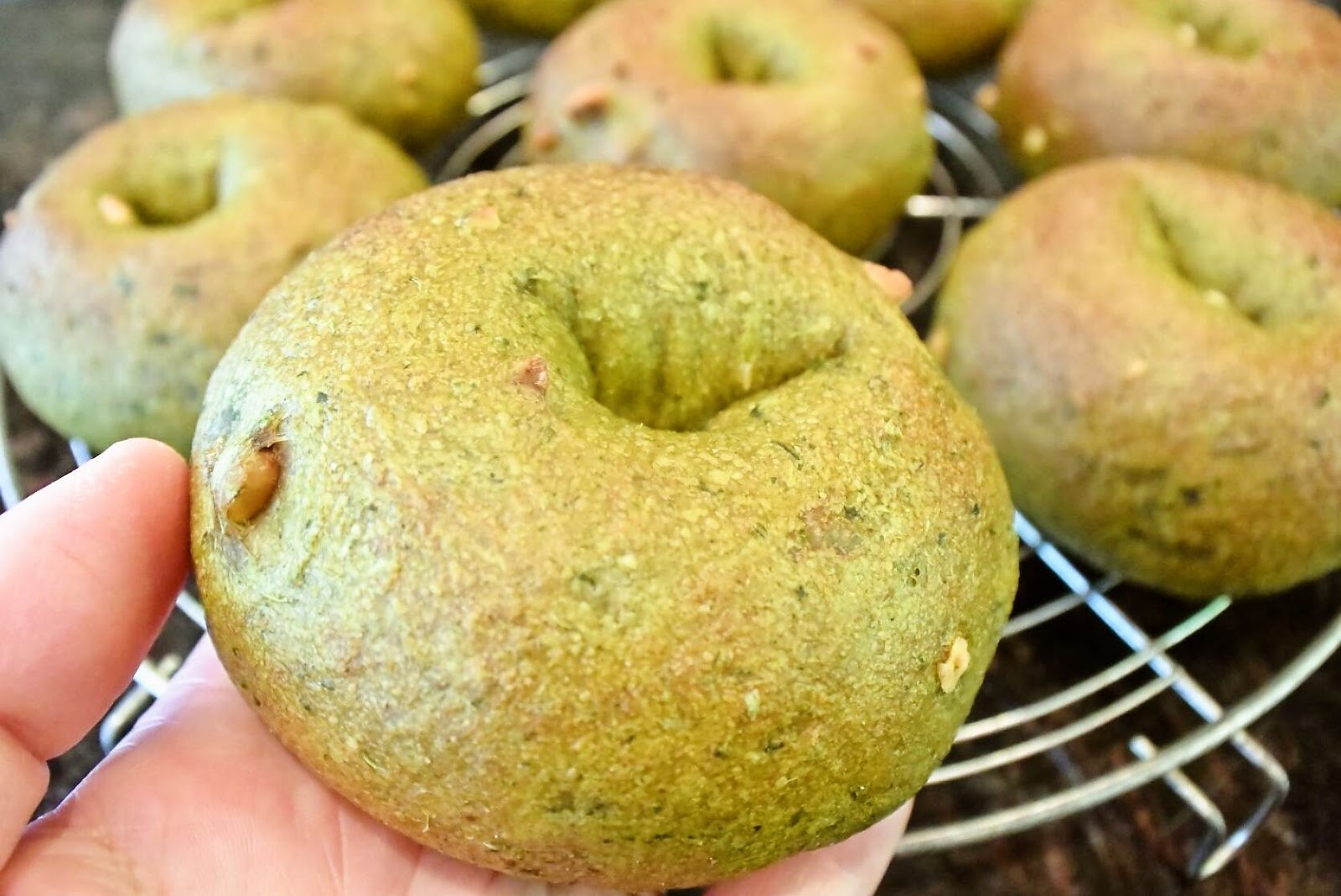
Keeru to kurumi no beeguru / kale and walnut bagels

One of our bagels takes advantage of kale for a deeper flavor, which is especially noticeable when toasted, while toasting also intensifies the crunch of walnuts.


This is a variation based on a plain version I adapted from ChefSteps (Amazing Chewy Bagels From Scratch). In my adaptation, shiokoji salted rice malt to lower sodium content also conditions the dough, making it softer and triggering a Maillard reaction due to its enzymes. For this reason, I do not use diastatic malt powder, which the original recipe lists as a key ingredient, but I do use non-diastatic malt powder for flavoring. Yet considering kale's effect of making the dough taste slightly "earthy and green," non-diastatic malt powder may not be needed at all in the recipe below. Until I experiment further, this is what appears at our table. These are smallish bagels packed with flavor.

1 bagel (1/8 recipe; 74 g baked):
219 calories; 6.8 g protein; 4.3 g fat; 37.7 g carbohydrate; 34.8 g net carbs; 93 mg sodium; 0 mg cholesterol; 2.9 g fiber

2019-04-29

Taiwan-fu tamago kureepu / dan bing / Taiwanese egg crepes

Found both on the street and at specialty takeout & eat-in eateries, egg crepes with various fillings are one of the many breakfast choices in Taiwan. Dan bing with ham was my usual choice at an eatery near my work. The crepes presented here are adapted from a Japanese translation of a Taiwanese cookbook by Zhou Qingyuan (周清源). To lower sodium content, I skip the salt and use cold milk instead of cold water. Below is my current favorite combination with alderwood smoked salmon, a Pacific Northwest specialty, and Thai basil with a note of anise.

Whole recipe (2 dan bing egg crepes with fillings, without dipping sauce):
533 calories; 22.9 g protein; 20.4 g fat; 59.7 g carbohydrate; 56.9 g net carbs; 269 mg sodium; 427 mg cholesterol; 2.8 g fiber

2019-04-27

Gomoku ankake udon / wheat noodles with thickened soup and assorted ingredients

Udon often is mentioned as a good choice when feeling unwell. When made with hot, thickened soup, it warms your body from inside. Noodles and warm soup alone is the basic foundation. Ginger -- either grated, finely julienned or only the squeezed juice -- intensifies the warming effect while adding a zesty note and aroma to your soup. Select and cook goodies according to your appetite and condition. While everything is simmered in broth starting with the toughest item below, goodies can be grilled or fried and added to the soup for those who want more texture. This is also a nice dish for chilly days.


The broth's sodium content is on the low end (0.7%), and partly because of the amount of vegetables and mushrooms, it might be too weak for those who have not been on a reduced sodium diet. Adjust the taste to your preferred level at the end.

1/2 of recipe (with virtually sodium-free homemade udon noodles):
480 calories; 22.0 g protein; 3.2 g fat; 87.0 g carbohydrate; 82.9 g net carbs; 651 mg sodium (with 50% reduced-sodium regular soy sauce and shiokoji salted rice malt); 72 mg cholesterol; 4.1 g fiber

2019-01-14

Kurumi daifuku / soft rice cake with sweetened azuki bean paste and walnuts

Toasted walnuts add a rich taste and crunch to a standard everyday daifuku rice cake. Turbinado in soft gyuhi mochi goes really well with walnuts and tsubuan crumbly azuki bean paste inside. Best on Day 1 for contrasting texture with walnuts, especially while still warm.


1 daifuku cake (1/4 of recipe):
130 calories; 2.8 g protein; 3.0 g fat; 23.4 g carbohydrate; 21.6 g net carbs; 1 mg sodium; 0 mg cholesterol; 1.8 g fiber; 145 mg potassium

2019-01-09

Koyadofu no ageyaki to renkon no horenso-an / fried freeze-dried tofu and lotus root with spinach dashi sauce

Rehydrating and frying koyadofu freeze-dried tofu results in a chewy and juicy texture, making a good contrast with crunchy lotus root. A blanket of flavorful dashi sauce brings the two ingredients together while adding a green touch of spinach. Ginger provides a zesty counter-punch to the rich taste from oil used in preparation. A nice side dish for cool days and nights.


1/2 of recipe:
160 calories; 5.2 g protein; 11.9 g fat; 7.3 g carbohydrate; 6.3 g net carbs; 100 mg sodium; 0.1 mg cholesterol; 1.0 g fiber; 267 mg potassium

2018-09-13

Kurumafu no katsudon / gluten cake cutlet rice bowl

While normal katsudon features pork cutlets as the main ingredient, this features cutlets made with gluten cakes. As gluten cake cutlets soak up the broth, they become very juicy and take on the texture of fatty meat, but without the actual fat of pork. This dish is filling even when served with a smaller portion of steamed rice, yet it does not overwhelm your stomach and leaves plenty of room to comfortably enjoy other dishes.

It is quick to prepare, if all ingredients are ready, so have other accompanying dishes or soup almost ready before starting to make katsudon, to ensure the optimal serving temperature.


1/2 of recipe (without steamed rice):
302 calories; 13.7 g protein; 17.0 g fat; 20.6 g carbohydrate; 15.1 g net carbs; 450 mg sodium (with 50% reduced-sodium soy sauce); 211 mg cholesterol; 5.5 g fiber; 413 mg potassium

1/2 of recipe (served with 110 g steamed rice [made with 1/3 180-cc cup dry rice]):
386 calories; 15.0 g protein; 17.1 g fat; 39.1 g carbohydrate; 33.4 g net carbs; 450 mg sodium (with 50% reduced-sodium soy sauce); 211 mg cholesterol; 5.7 g fiber; 428 mg potassium

1/2 of recipe (served with 170 g steamed rice [made with 1/2 180-cc cup dry rice]):
428 calories; 15.5 g protein; 17.2 g fat; 48.1 g carbohydrate; 42.4 g net carbs; 450 mg sodium (with 50% reduced-sodium soy sauce); 211 mg cholesterol; 5.7 g fiber; 435 mg potassium

2018-09-02

Shishito to eringi, myoga no miso-itame / stir-fried shishito peppers, king oyster mushroom and Japanese ginger buds with miso sauce

Crispy shishito and myoga stand out in this small side dish, which offers the punch of red miso against the soft and chewy texture of eringi mushroom. To ensure crispiness of shishito and myoga, cook eringi on relatively high heat to prevent it from letting out moisture and making everything soggy.


1/2 of recipe:
36 calories; 2.0 g protein; 1.3 g fat; 5.7 g carbohydrate; 3.1 g net carbs; 81 mg sodium (with shoyukoji soy sauce rice malt made with 50% reduced-sodium soy sauce); 0 mg cholesterol; 2.6 g fiber; 252 mg potassium

2018-08-31

Kuzushi-dofu no yakumi sarada / tofu salad with condiments

An easy tofu salad featuring the standard toppings for hiyayakko chilled tofu. This is a very quick dish, except for the time to let out the excess moisture from tofu. If you cannot wait, place large chunks of tofu between your palms and gently press.

I used to make this with tonburi, the boiled seeds of hokigi [Bassia scoparia or Kochia scoparia], in Japan. Since it is not available where we live, I use chia seeds below, but they are optional.


1/2 of recipe:
72 calories; 4.9 g protein; 4.2 g fat; 3.6 g carbohydrate; 2.1 g net carbs; 91 mg sodium (with 50% reduced-sodium soy sauce); 0 mg cholesterol; 1.5 g fiber; 171 mg potassium

2018-07-19

Kurumafu no katsu / gluten cake cutlets

Tasty, filling yet light cutlets made with gluten cakes. Compared to more commonly known tonkatsu pork cutlets, this dish is much lower in calories and gentler on your stomach. Gluten cakes are first flavored with dashi stock, shoyukoji soy sauce rice malt and vinegar to get a meaty taste, followed by usual preparation of cutlets, but in a leaner way (below). No shoyukoji available? Balsamic vinegar does a great job in that case.


1/2 of recipe (katsu only; sauce & vegetables not included):
222 calories; 7.9 g protein; 13.0 g fat; 17.3 g carbohydrate; 11.8 g net carbs; 67 mg sodium (with shoyukoji made with 50% reduced-sodium soy sauce); 53 mg cholesterol; 5.5 g fiber; 288 mg potassium

1/2 of recipe (katsu & sauce; vegetables not included):
228 calories; 7.9 g protein; 13.1 g fat; 18.7 g carbohydrate; 13.2 g net carbs; 163 mg sodium (with shoyukoji made with 50% reduced-sodium soy sauce); 53 mg cholesterol; 5.5 g fiber; 298 mg potassium

2018-07-04

Ebi to kabu no misoshiru / miso soup with shrimp and Japanese turnip

This very gentle yet full-flavored miso soup features our local coon shrimp -- baby-size botan ebi spot shrimp -- and kabu turnip. Sweet Saikyo white miso is used for maximum tenderness, which is countered by the nostril-clearing sensation of karashi mustard.


1/2 of recipe:
73 calories; 8.2 g protein; 1.0 g fat; 4.8 g carbohydrate; 3.5 g net carbs; 338 mg sodium; 46 mg cholesterol; 1.3 g fiber; 287 mg potassium

2018-06-27

Yakinasu, atsuage to ebi no raisunuudoru sarada / rice noodles with grilled eggplant, deep-fried tofu and shrimp salad

The sweet and sour flavor of a spicy dressing or dipping sauce is a big appeal in warm or hot weather. While grilled eggplant, atsuage deep-fried tofu and shrimp make a great salad individually or in combination, pairing them with rice noodles makes a quick, filling meal. Grill eggplant and atsuage until slightly burnt for a stronger aroma! This is something similar to what I used to eat at a Vietnamese restaurant in Portland, Oregon, years ago.


1/2 of recipe:
473 calories; 21.8 g protein; 15.2 g fat; 62.5 g carbohydrate; 57.3 g net carbs; 439 mg sodium; 58 mg cholesterol; 5.2 g fiber; 636 mg potassium

Dressing only (including shami dried shrimp solids; 1/2 of recipe):
25 calories; 1.9 g protein; 0 (0.08) g fat; 4.5 g carbohydrate; 4.2 g net carbs; 375 mg sodium; 10 mg cholesterol; 0.3 g fiber; 49 mg potassium