All recipes are for 2 servings unless noted. Oil is canola oil and salt is kosher salt.
Showing posts with label make ahead. Show all posts

2019-10-17

Daikon to ika no misoni / daikon radish and calamari simmered in miso-flavored broth

The humble daikon takes on the flavor of calamari, becoming something gentle yet deeply aromatic. This is my mom's kind of dish, which I grow to like as I get older. While miso paste typically is the only main seasoning, modifying the dish to reduce sodium content by partially replacing miso with sakekasu sake lees, kurozu brown rice vinegar and shoyukoji soy sauce rice malt successfully results in a pleasantly mild flavor that lets you unwind after a busy day. If a bit of extra flavor is wanted, add grated ginger for a zesty punch or taka no tsume red chili pepper for picante heat.


1/2 of recipe:
125 calories; 12.2 g protein; 1.3 g fat; 11.4 g carbohydrate; 10.1 g net carbs; 155 mg sodium (with 50% reduced-sodium soy sauce); 163 mg cholesterol; 1.3 g fiber

2019-09-19

Nagaimo no acharazuke / Chinese yam pickled in spicy sweetened vinegar

By simply adding taka no tsume red chili pepper to sweetened vinegar, you have another standard marinade for pickles. Fresh nagaimo Chinese yam stays relatively crisp in the marinade, and by Day 2 it becomes a bit milder although still offering some crunch and piquant sensation. As the pickle name's origin -- achar -- suggests, it pairs very well with a number of cuisines beyond Japanese dishes.


Whole recipe (nagaimo only):
60 calories; 2.0 g protein; 0.3 g fat; 12.9 g carbohydrate; 12.0 g net carbs; 2.8 mg sodium; 0 mg cholesterol; 0.9 g fiber

1/4 of recipe (nagaimo only):
15 calories; 0.5 g protein; 0.07 g fat; 3.2 g carbohydrate; 3.0 g net carbs; 0.7 mg sodium; 0 mg cholesterol; 0.2 g fiber

Marinade whole recipe (with shiokoji, erythritol and stevia):
32 calories; 0.2 g protein; 0.02 g fat; 5.3 g carbohydrate; 3.0 g net carbs; 98 mg sodium; 0 mg cholesterol; 0.02 g fiber

2019-09-05

Mabbuha / matbucha / stewed bell pepper and tomato salad

A bit fruity, sweet, sour and picante with a creamy texture. While it goes with many kinds of dishes, I like pairing it with an eggplant omelet for breakfast.
This is a recent WOW dish for me, and something I make repeatedly to have on hand. Adapted from a recipe by Ta-im, an Israeli restaurant in Tokyo, published in Ryori Tsushin [The Cuisine Press] May 2018 issue.


Whole recipe:
309 calories; 6.4 g protein; 25.0 g fat; 34.5 g carbohydrate; 2.7 g net carbs; 287 mg sodium; 0 mg cholesterol; 10.7 g fiber

1/6 recipe:
52 calories; 1.1 g protein; 4.2 g fat; 6.1 g carbohydrate; 2.7 g net carbs; 48 mg sodium; 0 mg cholesterol; 1.8 g fiber

1/8 recipe:
39 calories; 0.8 g protein; 3.1 g fat; 4.6 g carbohydrate; 2.7 g net carbs; 36 mg sodium; 0 mg cholesterol; 1.3 g fiber

2019-09-02

Kabu no shinodamaki / Japanese turnip rolled in thin deep-fried tofu, simmered in broth

Usuage thin deep-fried tofu wrappers absorb the flavor of dashi-based broth and kabu turnip, and each bite fills your mouth with the tasty broth along with the almost creamy texture of kabu. The oil content of usuage, although reduced almost 30% in the prep process, gives this simple combination more than enough richness.


1/4 of recipe (without grilled shishito): 
29 calories; 1.4 g protein; 1.1 g fat; 3.1 g carbohydrate; 2.4 g net carbs; 142 mg sodium; 0 mg cholesterol; 0.7 g fiber 

2019-06-08

Karashina no karashi-bitashi / mustard greens in mustard-flavored light dashi

A simple variation of a standard ohitashi, cooked vegetables marinated in light dashi. Among basic seasonings (soy sauce, salt, sake, mirin) for dashi for ohitashi, only soy sauce is chosen for this recipe to heighten the pungent aroma of karashi mustard.


1/4 of recipe:
16 calories; 1.6 g protein; 0.3 g fat; 2.6 g carbohydrate; 1.0 g net carbs; 66 mg sodium; 0 mg cholesterol; 1.6 g fiber; 124 mg potassium

1/2 of recipe:
31 calories; 3.3 g protein; 0.5 g fat; 5.1 g carbohydrate; 2.0 g net carbs; 133 mg sodium; 0 mg cholesterol; 3.1 g fiber; 249 mg potassium

2019-01-14

Kurumi daifuku / soft rice cake with sweetened azuki bean paste and walnuts

Toasted walnuts add a rich taste and crunch to a standard everyday daifuku rice cake. Turbinado in soft gyuhi mochi goes really well with walnuts and tsubuan crumbly azuki bean paste inside. Best on Day 1 for contrasting texture with walnuts, especially while still warm.


1 daifuku cake (1/4 of recipe):
130 calories; 2.8 g protein; 3.0 g fat; 23.4 g carbohydrate; 21.6 g net carbs; 1 mg sodium; 0 mg cholesterol; 1.8 g fiber; 145 mg potassium

2018-06-25

Furaido onion / onion chippu / fried oinion

A handy, toasty and crunchy topping or deep-tasting ingredient for lots of Southeast Asian dishes and more. While widely available at Asian grocery stores, it is very easy to make at home under the sun or in the oven using remaining heat after cooking other dishes. Being homemade translates into flexibility -- using minimum oil and no additional salt in this case. Shallots and garlic can be prepared in the same way.


Whole recipe (21 g):
97 calories; 2.1 g protein; 2.2 g fat; 18.7 g carbohydrate; 15.3 g net carbs; 4 mg sodium; 2 mg cholesterol; 3.4 g fiber; 318 mg potassium

2018-06-21

Fuki to satsumaage no nimono / Japanese butterbur and deep-fried fishcakes in broth

This is a reduced-sodium version of previously posted fuki to kamaboko no nimono (Japanese butterbur and fishcakes in broth). The process is pretty much the same, other than soaking fishcakes in boiling water to desalinate them in advance. Seasonings are tweaked a bit -- sweet elements (sake and mirin) and the salty ingredient (soy sauce) are both reduced while adding a tiny amount of rice vinegar. The result? It is just as tasty as the older version.


1/2 of recipe:
68 calories; 5.2 g protein; 1.4 g fat; 7.2 g carbohydrate; 6.6 g net carbs; 99 mg sodium; 8 mg cholesterol; 0.6 g fiber; 189 mg potassium

2018-04-28

Kyabetsu to hakusai no sakura ebi iri ohitashi / cabbage and napa cabbage in light broth with dried shrimp

The soft green color of cabbage and napa cabbage makes a nice contrast with the pretty pink of sakura ebi. Both vegetables are microwaved for quick preparation, which also minimizes loss of vitamins into water when boiling them. This side dish has a gentle sweet aftertaste with a hint of clear saltiness, and goes well with dishes that have strong flavor or are prepared with oil.


1/2 of recipe: 19 calories; 1.7 g protein; 0.4 g fat; 3.4 g carbohydrate; 2.3 g net carbs; 119 mg sodium; 9 mg cholesterol; 1.1 g fiber; 183 mg potassium

2018-02-21

Mineoka-dofu / Mineoka-tofu / milk kudzu pudding

Often made today with cream and sugar as a dessert, this milk pudding originally was improvised as a quasi-tofu dish about 300 years ago when the Shogun, during a visit to the pastures of Mineoka, simply mentioned his desire to eat tofu. Upon hearing the Shogun's words, a cook accompanying the Shogun made the pudding using cow's milk and kudzu found at the pastures. Traditionally, milk is the only dairy ingredient that goes into the pudding; I mixed it with additive-free tonyu soy milk to cut back on sodium in the recipe below. This pudding contains no sweetener, but its milky taste and creamy texture are quite gratifying.      


1 serving (1/4 of Mineoka-dofu recipe, 1/2 of sauce recipe, shrimp & arugula):
113 calories; 5.7 g protein; 5.3 g fat; 10.8 g carbohydrate; 9.9 g net carbs; 105 mg sodium; 19 mg cholesterol; 0.9 g fiber

Whole recipe of Mineoka-dofu only:
388 calories; 14.4 g protein; 20.6 g fat; 37.8 g carbohydrate; 10.8 g net carbs; 85 mg sodium; 24 mg cholesterol; 2.4 g fiber

2018-02-11

Ebi no nikogori suigyoza / shrimp shui jiao dumplings

Delightful and tasty dumplings featuring shrimp. I used to use coconut oil as a pork fat substitute, but I could not fully get used to its clingy taste. Other oil or fat seemed to lack something. Then I realized that juiciness does not have to come from fat or oil. For example, with xiao long bao steamed soup buns/dumplings, the juiciness of the filling comes from the soup. Below I applied the technique of making nikogori jelly with the water used to rehydrate dried scallops, and mixed it in with the shrimp filling.


1/2 recipe (dumplings only; yu choy sum on top and dipping sauce not included):
251 calories; 15.0 g protein; 2.1 g fat; 40.3 g carbohydrate; 38.2 g net carbs; 149 mg sodium; 80 mg cholesterol; 2.1 g fiber

2018-01-30

Bakuraba / baklava

This satisfies Tom's new habit of eating sweets without increasing sodium intake. But when I made these baklava earlier last year, he blamed me for him gaining weight, as I repeatedly experimented to figure out a good proportion of ingredients, especially erythritol (calorie- & net-carbs-free sugar substitute) so it does not re-crystallize when completely cool and does not trigger any noticeable cooling sensation in the mouth.

My original thought was, if I made 28 small pieces in one batch, they should last for 28 days or at least a few weeks. Making baklava from scratch is time consuming, but it would be not bad if each batch lasted that long ... So far I have been proven ridiculously wrong. Tom cannot stop reaching for more pieces. Although the recipe below is not heavily sweet, as with other sweets I make, it could be addictive. 

Whole recipe:
2,396 calories; 37.5 g protein; 175.1 g fat; 225.9 g carbohydrate; 165.9 g net carbs; 44 mg sodium; 158 mg cholesterol; 15.3 g fiber

1 piece (1/28 recipe):
86 calories; 1.3 g protein; 6.3 g fat; 8.1 g carbohydrate; 5.9 g net carbs; 1.6 mg sodium; 6 mg cholesterol; 0.5 g fiber

2017-10-18

Okara-konnyaku no nikumiso-fu / sweet and salty fried ground soybean pulp yam cakes

A meaty meat-less topping for noodles, rice and more. This is the latest popular creation using okara soybeans at our house. It also features gobo burdock root and dried shiitake mushrooms for deeper taste, aroma and variation in texture. Its strong flavor translates into keeping longer in the fridge. One major disadvantage is that Tom wants to eat more than he should. This is made to fit a sodium savvy diet, but take care with how much you eat.


Whole recipe (with okara-konnyaku made with nagaimo Chinese yam):
311 calories; 12.4 g protein; 13.1 g fat; 43.8 g carbohydrate; 21.0 g net carbs; 972 mg sodium; 0 mg cholesterol; 22.8 g fiber

1 heaping tablespoon (4 tsp/20 g; 1/10 of recipe):
28 calories; 1.1 g protein; 1.2 g fat; 4.0 g carbohydrate; 1.9 g net carbs; 88 mg sodium; 0 mg cholesterol; 2.1 g fiber

2017-10-16

Murasaki tamanegi to renkon no amazuzuke / red onion and lotus root in sweetened vinegar

A handy small side dish or condiment to accompany other dishes or in a bento box. Its pleasant color and refreshing taste offer a nice change of pace. While red onion alone would become vivid purplish pink in the vinegar, adding another pale color ingredient -- lotus root in this case -- results in a much softer pink for both ingredients.


Whole recipe (solid ingredients):
111 calories; 2.7 g protein; 0.2 g fat; 29.3 g carbohydrate; 21.8 g net carbs; 46 mg sodium; 0 mg cholesterol; 3.9 g fiber

2017-10-12

Okara-konnyaku / soybean pulp yam cakes

Okara-konnyaku is a hybrid of okara soybean pulp (rich in soluble fiber) and konnyaku yam cake (rich in non-soluble fiber), and has been around for more than a decade in Japan. It is mainly used as a meat substitute for health, weight loss and diet preference reasons. As with konnyaku, okara-konnyaku becomes very chewy after being frozen and defrosted. While konnyaku simply become fibrous after the same process or tofu becomes spongy (like koyadofu freeze-dried tofu after rehydration), okara-konnyaku takes on a meaty texture. Among dishes I have tried, it seems to work best when used like ground meat, especially poultry and pork. Because it is basically fiber, it is very filling by itself. Moreover, it does not cause any heartburn or upset stomach in people who are not accustomed to eating meat, such as myself. This would be a great option for those who routinely eat meat and want to cut back to reduce fat or calories or for other health reasons. You would not notice that your hamburger patties or meat loaf contains okara-konnyaku if the proportion is moderate.

You can find a number of preparation methods and ingredient proportions. Below is my current standard way of making okara-konnyaku at home.


100 g okara-konnyaku, boiled:
52 calories; 2.6 g protein; 1.4 g fat; 8.5 g carbohydrate; 2.0 g net carbs; 3 mg sodium; 0 mg cholesterol; 6.5 g fiber

100 g okara-konnyaku, defrosted:
63 calories; 3.1 g protein; 1.7 g fat; 10.4 g carbohydrate; 2.5 g net carbs; 3 mg sodium; 0 mg cholesterol; 7.9 g fiber

100 g okara-konnyaku, excess water removed:
86 calories; 4.3 g protein; 2.3 g fat; 14.0 g carbohydrate; 3.3 g net carbs; 4 mg sodium; 0 mg cholesterol; 10.7 g fiber

2017-10-11

Kabocha-dofu no akadashi / Japanese pumpkin tofu with red miso soup

A variation of gomadofu [sesame tofu] featuring kabocha pumpkin. Among the many ways to enjoy this creamy tofu, serving it with blanched kabu Japanese turnip leaves and pungent karashi mustard in red miso soup is my favorite. Kabu leaves retain their spiciness even after blanching, and together with karashi mustard they create an interesting spark in your mouth when paired with mild and sweet kabocha. This dish alone is quite small and is more suitable for a very light meal or as part of a course-type meal.


1/2 of kabocha-dofu no akadashi recipe:
45 calories; 1.6 g protein; 1.0 g fat; 7.8 g carbohydrate; 6.5 g net carbs; 109 mg sodium (with reduced-sodium miso); 0 mg cholesterol; 1.3 g fiber

Kabocha-dofu only (1/6 of kabocha-dofu recipe):
35 calories; 0.7 g protein; 0.8 g fat; 6.5 g carbohydrate; 5.5 g net carbs; 8 mg sodium; 0 mg cholesterol; 1.0 g fiber

2017-09-07

Satsumaimo no taruto / sweet potato tart

A very easy and delicious tart with satsumaimo sweet potato. One of our favorites for fall, it tastes like a rich sweet potato pudding.


Whole tart:
1,114 calories; 12.6 g protein; 66.4 g fat; 96.2 g carbohydrate; 80.7 g net carbs; 47 mg sodium; 131 mg cholesterol; 10.0 g fiber

1/8 slice:
139 calories; 1.6 g protein; 8.3 g fat; 12.0 g carbohydrate; 10.1 g net carbs; 6 mg sodium; 16 mg cholesterol; 1.3 g fiber

2017-09-04

Guriin oriibu no chuuka-aji / Chinese-flavored green olives

An experiment on simultaneous desalination and flavoring with a Chinese taste. Instead of adding salt to water to draw out the excess sodium of olives, I used shaoxing wine along with a couple of Chinese spices. As hoped, finished olives have very mild saltiness while imparting soft spiciness from Sichuan peppercorns and deep aroma of star anise. They work great as a Chinese pickle substitute.


2017-08-27

Somen no tsuketsuyu, goma-aji / sesame-flavored dipping sauce for thin wheat noodles

Ground toasted sesame seeds and chili bean sauce make this somen noodle dipping sauce taste richer and more satisfying. Great cold or hot.


1/4 of recipe (dipping sauce only):
54 calories; 2.2 g protein; 3.0 g fat; 3.4 g carbohydrate; 2.4 g net carbs; 228 mg sodium (with 50% reduced-sodium soy sauce and shoyukoji made with 50% reduced-sodium soy sauce); 0 mg cholesterol; 0.7 g fiber

1/3 of recipe (dipping sauce only):
72 calories; 2.9 g protein; 4.0 g fat; 4.5 g carbohydrate; 3.6 g net carbs; 304 mg sodium (with 50% reduced-sodium soy sauce and shoyukoji made with 50% reduced-sodium soy sauce); 0 mg cholesterol; 0.9 g fiber

Whole recipe (dipping sauce only):
216 calories; 8.7 g protein; 11.9 g fat; 13.5 g carbohydrate; 10.7 g net carbs; 913 mg sodium (with 50% reduced-sodium soy sauce and shoyukoji made with 50% reduced-sodium soy sauce); 0 mg cholesterol; 2.8 g fiber

2017-08-18

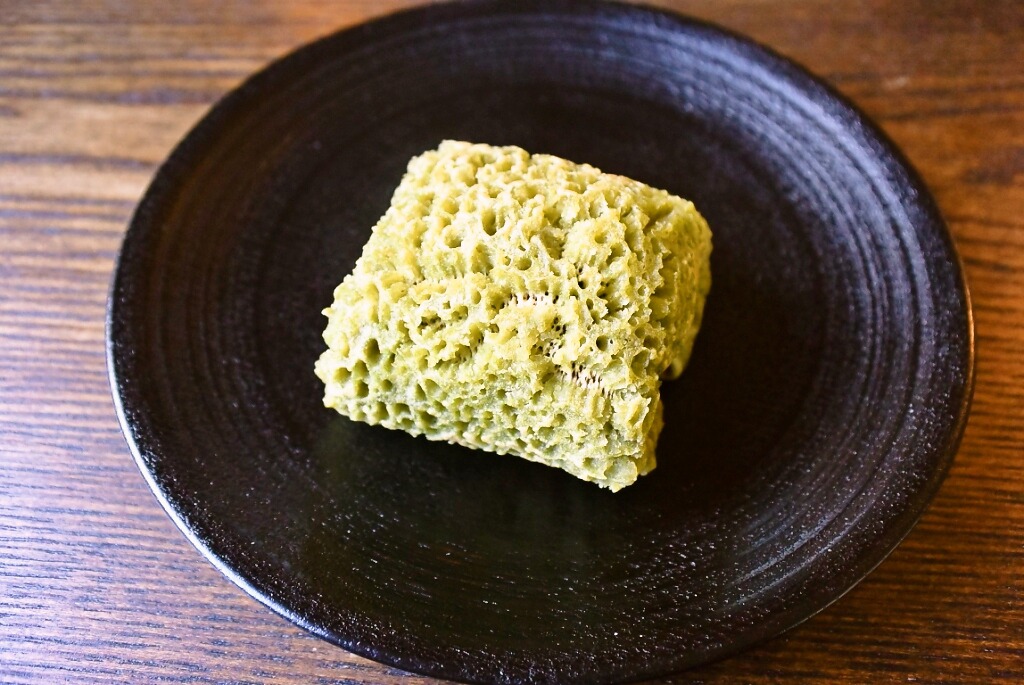
Chabukusa, matcha-aji / crepe wrapper cake, matcha flavor

Also called tsuyabukusa or fukusa, this little cake tastes similar to everyday dorayaki or taiyaki. The sea sponge look is not just unique; the air pockets lighten the cake's chewy texture. With this matcha version, the delightful aroma of green tea fills your mouth as you take a bite.

This is fun to make. The batter you spread on the hot pan quickly produces air bubbles, which you gently rub or touch with paper or cloth to open up and make craters.  Keep the heat level relatively high for the best bubbling results.


1 cake (1/5 of recipe):
110 calories; 3.2 g protein; 1.0 g fat; 21.5 g carbohydrate; 19.8 g net carbs; 23 mg sodium; 21 mg cholesterol; 1.7 g fiber