All recipes are for 2 servings unless noted. Oil is canola oil and salt is kosher salt.
Showing posts with label shoyukoji. Show all posts

2018-09-02

Shishito to eringi, myoga no miso-itame / stir-fried shishito peppers, king oyster mushroom and Japanese ginger buds with miso sauce

Crispy shishito and myoga stand out in this small side dish, which offers the punch of red miso against the soft and chewy texture of eringi mushroom. To ensure crispiness of shishito and myoga, cook eringi on relatively high heat to prevent it from letting out moisture and making everything soggy.


1/2 of recipe:
36 calories; 2.0 g protein; 1.3 g fat; 5.7 g carbohydrate; 3.1 g net carbs; 81 mg sodium (with shoyukoji soy sauce rice malt made with 50% reduced-sodium soy sauce); 0 mg cholesterol; 2.6 g fiber; 252 mg potassium

2018-07-19

Kurumafu no katsu / gluten cake cutlets

Tasty, filling yet light cutlets made with gluten cakes. Compared to more commonly known tonkatsu pork cutlets, this dish is much lower in calories and gentler on your stomach. Gluten cakes are first flavored with dashi stock, shoyukoji soy sauce rice malt and vinegar to get a meaty taste, followed by usual preparation of cutlets, but in a leaner way (below). No shoyukoji available? Balsamic vinegar does a great job in that case.


1/2 of recipe (katsu only; sauce & vegetables not included):
222 calories; 7.9 g protein; 13.0 g fat; 17.3 g carbohydrate; 11.8 g net carbs; 67 mg sodium (with shoyukoji made with 50% reduced-sodium soy sauce); 53 mg cholesterol; 5.5 g fiber; 288 mg potassium

1/2 of recipe (katsu & sauce; vegetables not included):
228 calories; 7.9 g protein; 13.1 g fat; 18.7 g carbohydrate; 13.2 g net carbs; 163 mg sodium (with shoyukoji made with 50% reduced-sodium soy sauce); 53 mg cholesterol; 5.5 g fiber; 298 mg potassium

2018-04-21

Miso yasai raamen / vegetable ramen noodles with miso-flavored soup

Finally, a sodium-savvy ramen with plenty of vegetables and great-tasting soup! More toppings mean more soup going into your mouth, especially when toppings are cut or sliced into small sizes, as a greater surface area is likely to carry more soup into your mouth. So for a reduced-sodium version, having lots of toppings is counter-intuitive, yet we opted for julienned vegetables for the extra flavor they add.


After being on a reduced-sodium diet for more than three and a half years, this is quite salty for us and definitely tasty. The recipe below is at the low end of the sodium content spectrum (soup has a salt level of 0.8% whereas soup at ramen shops averages 1.5%). Feel free to add more seasonings to taste, at your own risk ...


1/2 of recipe (approx. half of soup left in bowl): 
515 calories; 17.0 g protein; 9.3 g fat; 88.1 g carbohydrate; 15.8 g net carbs; 781 mg sodium* (with reduced-sodium miso and shoyukoji made with 50% reduced-sodium soy sauce); 11 mg cholesterol; 7.5 g fiber; 706 mg potassium 
*Stir-fried vegetable toppings alone contain 100 mg sodium per serving.

2018-01-27

Ninjin no shirishiri / stir-fried shredded carrot with eggs

A tasty everyday dish from Okinawa that has been gaining popularity across Japan in recent years. Slowly sauteing carrots with a small amount of oil enhances the sweetness of the vegetable, and eggs add a gentle, rich taste. Among a number of variations, canned tuna is often mentioned as an addition. The recipe below features okara-konnyaku (soybean pulp yam cakes) to make the dish more filling as well as snow peas for color.


1/2 recipe:
115 calories; 6.1 g protein; 5.4 g fat; 11.2 g carbohydrate; 5.1 g net carbs; 128 mg sodium (with 50% reduced-soy sauce and shoyukoji made with 50% reduced-sodium soy sauce; 106 mg cholesterol; 6.1 g fiber

2018-01-25

Satsumaimo to ebi no tai reddo karee / Thai red curry noodles with sweet potatoes and shrimp

Once ingredients are prepped or chopped, it takes less than 30 minutes to cook this tasty, warm and filling dish served with noodles of your choice. Shoyukoji soy sauce rice malt and kurozu brown rice vinegar work their magic yet again here to minimize the amount of nampla as well as sodium-loaded red curry paste.


1/2 recipe (curry only, noodles are excluded):
311 calories; 16.2 g protein; 14.7 g fat; 30.0 g carbohydrate; 24.3 g net carbs; 622 mg sodium (with shoyukoji made of 50% reduced-sodium soy sauce); 99 mg cholesterol; 5.7 g fiber

2017-10-31

Shirunashi tantan men / dan dan mian noodles

Yummy dan dan noodles featuring okara-konnyaku bits and Chinese-flavored green olives. The numbing spiciness of hua jiao Sichuan peppercorns is intriguing in this dish. One of the big hits in our kitchen this year.
Use fewer noodles if adding more vegetables or other unflavored goodies, as the amount of sauce is on the low end below.


1/2 of recipe:
523 calories; 14.2 g protein; 16.2 g fat; 81.6 g carbohydrate; 75.6 g net carbs; 497 mg sodium (with lower sodium seasonings); 0.2 mg cholesterol; 6.0 g fiber

1/2 of recipe without noodles:
177 calories; 4.2 g protein; 14.2 g fat; 9.6 g carbohydrate; 5.6 g net carbs; 439 mg sodium (with lower sodium seasonings); 0.2 mg cholesterol; 4.0 g fiber 

2017-10-18

Okara-konnyaku no nikumiso-fu / sweet and salty fried ground soybean pulp yam cakes

A meaty meat-less topping for noodles, rice and more. This is the latest popular creation using okara soybeans at our house. It also features gobo burdock root and dried shiitake mushrooms for deeper taste, aroma and variation in texture. Its strong flavor translates into keeping longer in the fridge. One major disadvantage is that Tom wants to eat more than he should. This is made to fit a sodium savvy diet, but take care with how much you eat.


Whole recipe (with okara-konnyaku made with nagaimo Chinese yam):
311 calories; 12.4 g protein; 13.1 g fat; 43.8 g carbohydrate; 21.0 g net carbs; 972 mg sodium; 0 mg cholesterol; 22.8 g fiber

1 heaping tablespoon (4 tsp/20 g; 1/10 of recipe):
28 calories; 1.1 g protein; 1.2 g fat; 4.0 g carbohydrate; 1.9 g net carbs; 88 mg sodium; 0 mg cholesterol; 2.1 g fiber

2017-05-16

Gomadashi / fish sesame paste

I first encountered the expression gomadashi on a website introducing regional udon specialties. It is a paste made of grilled fish, sesame seeds, soy sauce and sweetener. The paste's name does not intuitively convey how tasty it is. It is typically served with udon wheat noodles. It is also good with rice and as an addition to a number of dips and dressings. When making the paste, grilling the fish takes the longest, and once it is done, the paste should keep in the fridge for a relatively long time -- 4 weeks when made with regular soy sauce is what people say, so probably 2+ weeks with the reduced sodium version below.


1 tbsp (20g):
56 calories; 3.8 g protein; 3.4 g fat; 2.8 g carbohydrate; 2.0 g net carbs; 190 mg sodium (with 50% reduced-sodium soy sauce & shoyukoji made with 50% reduced-sodium soy sauce); 5 mg cholesterol; 0.8 g fiber

Whole recipe (approx. 170g):
476 calories; 32.5 g protein; 28.8 g fat; 23.7 g carbohydrate; 16.7 g net carbs; 1,601 mg sodium (with 50% reduced-sodium soy sauce & shoyukoji made with 50% reduced-sodium soy sauce); 42 mg cholesterol; 7.0 g fiber

2016-04-19

Nitamago / flavored soft-boiled eggs

A popular topping for ramen noodles! These eggs are also tasty on their own, in addition to working well as a topping for other types of noodles or steamed rice and as part of a salad (one of key components or as dressing). The recipe below involves slow flavoring in the fridge, where eggs are ready starting on Day 2 and lasting at least to Day 6.


83 calories (1 egg); 6.6 g protein; 5.3 g fat; 1.4g carbohydrate; 1.2 g net carbs; 115 mg sodium (with 50% reduced-sodium soy sauce and shoyukoji made of 50% reduced-sodium soy sauce); 214 mg cholesterol; 0.2 g fiber; 74 mg potassium 

2016-03-14

Sundupu-yo yannyomu / yangnyeom seasoning mix for soondupu jjigae Korean soft tofu stew

This seasoning mix lets you make tasty soondupu jjigae that is low in sodium!


Whole recipe:
295 calories; 5.0 g protein; 19.8 g fat; 19.9 g carbohydrate; 19.2 g net carbs; 464 mg sodium; 0 mg cholesterol; 0.7 g fiber

1 tsp (6 g):
21 calories; 0.4 g protein; 1.4 g fat; 1.4 g carbohydrate; 1.4 g net carbs; 33 mg sodium; 0 mg cholesterol; 0.1 g fiber

2016-01-28

Tonyu miso nikomi udon / hot-pot udon wheat noodles in red miso and soy milk broth

A personal-size, sizzling hot pot with udon for cold days. The combination of aka miso and soy milk makes this a mild yet deep and satisfying dish. As it is individually cooked in a small clay pot, goody choices can easily be personalized. Even better, each pot can be prepared at a different time -- when noodles, soup and goodies are prepped and ready for assembly, everyone gets to enjoy hot pot simmered just for them, which is perfect for busy days when family members are on different schedules. This dish warms you up from the inside, but you still need to be careful not to burn your mouth!


With 80 g dried udon wheat noodles per serving:
529 calories (1/2 of recipe); 26.8 g protein; 13.3 g fat; 75.4 g carbohydrate; 67.2 g net carbs; 723 mg sodium (with shoyukoji made with 50% reduced-sodium soy sauce); 214 mg cholesterol; 8.2 g fiber

2015-11-22

Kaki to shungiku no shiraae / persimmon and garland chrysanthemum in tofu dressing

A dish for autumn -- juicy, sweet and astringent persimmon paired with garland chrysanthemum, a cold season green with a distinctive taste and aroma. Mild, creamy tofu dressing softens the overall tone, binding the two different characters together. Try this with persimmon that is still crisp -- the contrasting textures add an intriguing twist to this little dish.  


1/3 of recipe:
48 calories; 1.8 g protein; 1.8 g fat; 6.9 g carbohydrate; 8.1 g net carbs; 53 mg sodium; 0 mg cholesterol; 1.2 g fiber 

1/2 of recipe:
72 calories; 2.8 g protein; 2.7 g fat; 10.4 g carbohydrate; 5.8 g net carbs; 79 mg sodium; 0 mg cholesterol; 1.8 g fiber

2015-10-08

Papurika to hijiki no marine / marinated sweet pepper and hijiki seaweed

Juicy, cheerful sweet pepper is quickly microwaved and marinated with boiled hijiki. The combination of apple cider vinegar and rice vinegar is fruity and mild, making it a good match for non-Japanese meals, too. A great addition as an appetizer or as part of a salad or bento.


1/4 of recipe:
42 calories; 0.9 g protein; 2.2 g fat; 5.5 g carbohydrate; 5.2 g net carbs; 70 mg sodium (with shoyukoji made with 50% reduced-sodium soy sauce); 0 mg cholesterol; 0.3 g fiber 

2015-09-09

Okara to kinoko-iri kabocha no korokke / pumpkin croquettes with soybean pulp and mushrooms

Savory and sweet pumpkin croquettes. Sauteed enoki and eringi mushrooms are added for a slightly earthy, deep taste and aroma, which nicely disguises the low sodium content of the dish. The deep-fried version with crispy panko bread crumbs is quite satisfying even when eating only one or two pieces. The baked version tastes light and significantly cuts down the amount of oil and calories. The baked version involves a bit of a process to prepare panko, but it can be done ahead of time.


Deep-fried version (1/2 of recipe):
391 calories; 6.5 g protein; 26.4 g fat; 32.9 g carbohydrate;  25.0 g net carbs; 90 mg sodium (with shoyukoji made with 50% reduced-sodium soy sauce); 27 mg cholesterol; 7.9 g fiber

Baked version (1/2 of recipe):
202 calories; 6.5 g protein; 6.0 g fat; 32.9 g carbohydrate; 25.0 g net carbs; 90 mg sodium (with shoyukoji made with 50% reduced-sodium soy sauce); 27 mg cholesterol; 7.9 g fiber

2015-06-30

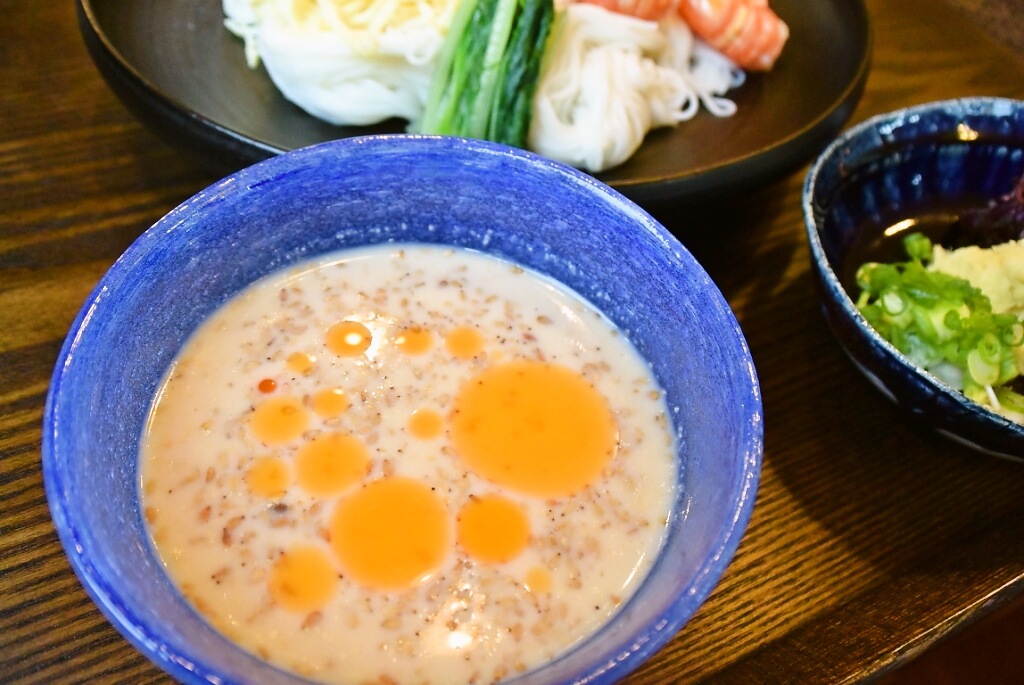
Somen no tonyu tsuketsuyu / soy milk dipping sauce for thin wheat noodles

This mild and rich soy milk-based dipping sauce is quite filling. Pair it with somen or hiyamugi noodles or thin udon noodles accompanied by goodies for a more substantial meal. Among condiments, ginger goes especially well with this dipping sauce, so grate more than usual.


1/2 of recipe:
184 calories; 9.3 g protein; 12.8 g fat; 9.8 g carbohydrate; 7.6 g net carbs; 191 mg sodium (with shoyukoji made with 50% reduced-sodium soy sauce);  0 mg cholesterol; 2.2 g fiber 

When served with 100 g (dry) somen noodles with 1/2-egg kinshitamago (julienned egg crepe), a small bunch of blanched mizuna, fresh kaiware daikon radish sprouts, 3 grilled spot shrimp and condiments (small knob ginger, 2 purple shiso leaves, 1/2 green onion) per serving:
641 calories; 30.8 g protein; 18.6 g fat; 83.8 g carbohydrate; 78.2 g net carbs; 442 mg sodium; 175 mg cholesterol; 5.6 g fiber 

2015-01-11

Menuke to takenoko no nitsuke / rock cod and bamboo shoot in reduced broth

One of the standard quick dishes when you have really fresh fish. Nitsuke is cooked with a relatively small amount of strong-flavored broth, and tastes substantial. While fish is often the only principal ingredient, pairing it with an in-season vegetable adds a pleasant layer of aroma and flavor. Very early-season takenoko bamboo shoot is used here. The broth is for a low-sodium diet; for a conventional recipe, see karei no nitsuke (sole simmered in reduced broth).


1/2 of recipe:
173 calories; 27.3 g protein; 2.2 g fat; 8.4 g carbohydrate; 6.2 g net carbs; 355 mg sodium (when using 50% reduced-sodium soy sauce and shoyukoji made with 50% reduced-sodium soy sauce); 54 mg cholesterol; 2.2 g fiber

2014-12-16

Hasumushi / steamed fish with grated lotus root, with light thickened sauce

A comforting steamed fish dish for winter. Enjoy the fresh taste of in-season fish that has been sealed beneath a blanket of grated lotus root. Savory thickened sauce keeps the dish warm, while pungent wasabi brightens the overall tone. Have a spoon ready!

Below is a simple example with petrale sole and dried shiitake mushroom mixed in renkon lotus root. 


1/2 of recipe:
173 calories; 24.5 g protein; 1.6 g fat; 13.6 g carbohydrate; 12.1 g net carbs; 302 mg sodium (when using shoyukoji made with 50% reduced-sodium soy sauce); 55 mg cholesterol; 1.5 g fiber

2014-10-20

Kyabetsu to egoma no namuru / namul salad with cabbage and wild sesame leaves

The soft taste of cabbage is paired with the distinctive flavor of egoma wild sesame leaves. These two also complement each other in terms of aroma and color.


1/4 of recipe:
10 calories; 0.5 g protein; 0.1 g fat; 2.2 g carbohydrate; 1.4 g net carbs; 36 mg sodium; 0 mg cholesterol; 0.8 g fiber

2014-10-14

Shiso soosu / green perilla sauce

A wonderful pesto-like sauce that works as a condiment or dressing.


1 tbsp (12 g): 
39 calories; 0.3 g protein; 3.6 g fat; 1.2 g carbohydrate; 0.9 g net carbs; 113 mg sodium; 0 mg cholesterol; 0.3 g fiber

2014-09-20

Egoma no kimuchi / kkaennip kimchi / wild perilla leaf kimchi

This simple Korean pickle of egoma wild sesame leaves is a great companion for rice. While some people do not care for fresh egoma leaves, the pickling process nicely softens their distinctive aroma and taste, transforming this Korean shiso into an appetizing accent for everyday meals.


5 egoma leaves (1/8 of recipe): 
26 calories; 1.0 g protein; 0.3 g fat; 4.3 g carbohydrate; 3.7 g net carbs; 75 mg sodium; 0 mg cholesterol; 0.6 g fiber