All recipes are for 2 servings unless noted. Oil is canola oil and salt is kosher salt.
Showing posts with label shiokoji. Show all posts

2019-10-20

Biitsu beeguru / beet bagels

Confectionery sweet, according to my family in Japan. Pureed baked beet is added to the dough for a colorful hue. When made into bagels, the pureed beet has no earthy overtone that some people are not very fond of. Orange peel bits give a fruity note, which pairs well with beets. As with kale and walnut bagels, these reddish bagels also are on the smallish side and have much less sodium than regular commercial versions.


1 bagel (1/8 recipe; 75 g baked):
203 calories; 6.3 g protein; 0.9 g fat; 41.5 g carbohydrate; 38.1 g net carbs; 99 mg sodium; 0 mg cholesterol; 3.4 g fiber

2019-09-05

Mabbuha / matbucha / stewed bell pepper and tomato salad

A bit fruity, sweet, sour and picante with a creamy texture. While it goes with many kinds of dishes, I like pairing it with an eggplant omelet for breakfast.
This is a recent WOW dish for me, and something I make repeatedly to have on hand. Adapted from a recipe by Ta-im, an Israeli restaurant in Tokyo, published in Ryori Tsushin [The Cuisine Press] May 2018 issue.


Whole recipe:
309 calories; 6.4 g protein; 25.0 g fat; 34.5 g carbohydrate; 2.7 g net carbs; 287 mg sodium; 0 mg cholesterol; 10.7 g fiber

1/6 recipe:
52 calories; 1.1 g protein; 4.2 g fat; 6.1 g carbohydrate; 2.7 g net carbs; 48 mg sodium; 0 mg cholesterol; 1.8 g fiber

1/8 recipe:
39 calories; 0.8 g protein; 3.1 g fat; 4.6 g carbohydrate; 2.7 g net carbs; 36 mg sodium; 0 mg cholesterol; 1.3 g fiber

2019-05-04

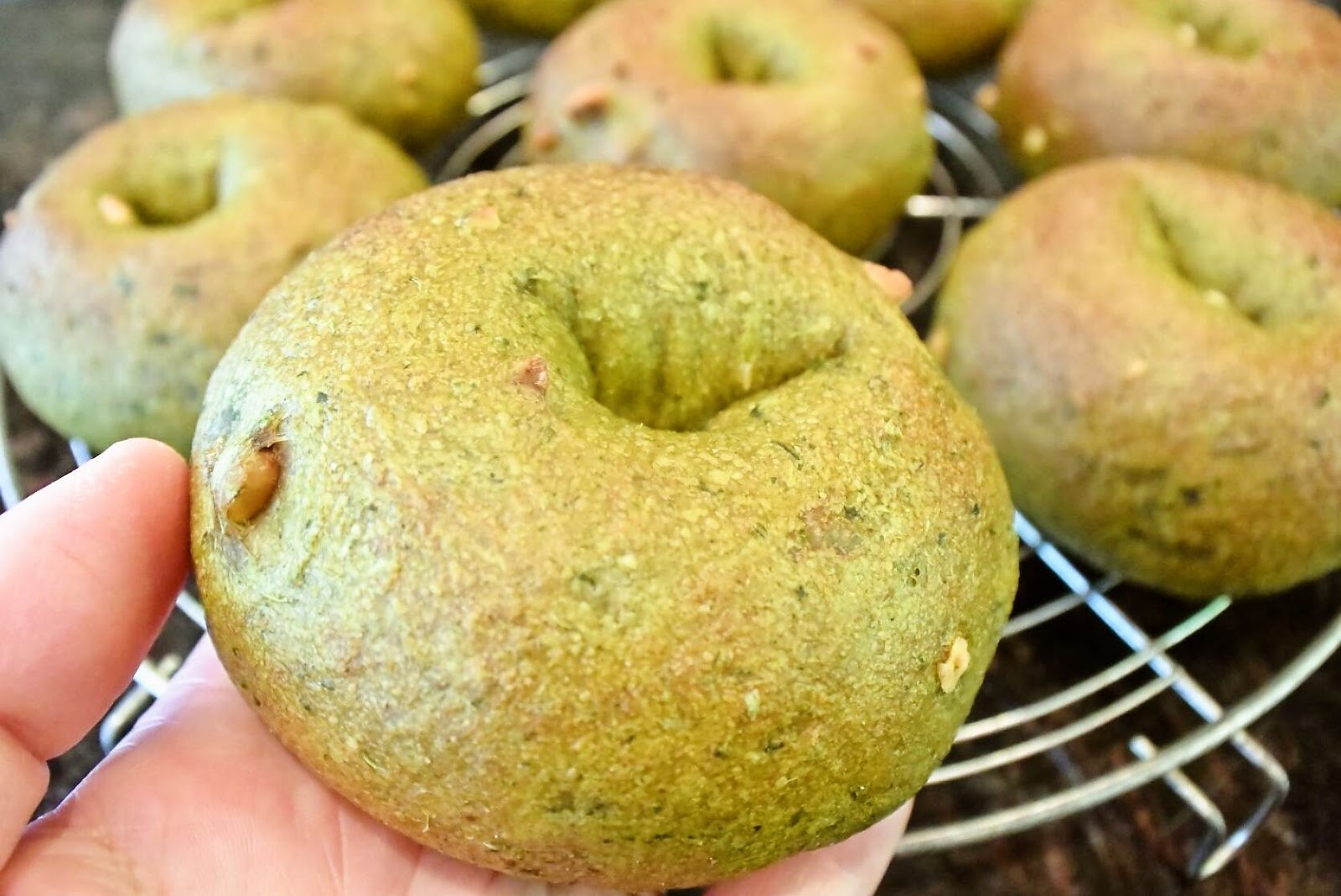
Keeru to kurumi no beeguru / kale and walnut bagels

One of our bagels takes advantage of kale for a deeper flavor, which is especially noticeable when toasted, while toasting also intensifies the crunch of walnuts.


This is a variation based on a plain version I adapted from ChefSteps (Amazing Chewy Bagels From Scratch). In my adaptation, shiokoji salted rice malt to lower sodium content also conditions the dough, making it softer and triggering a Maillard reaction due to its enzymes. For this reason, I do not use diastatic malt powder, which the original recipe lists as a key ingredient, but I do use non-diastatic malt powder for flavoring. Yet considering kale's effect of making the dough taste slightly "earthy and green," non-diastatic malt powder may not be needed at all in the recipe below. Until I experiment further, this is what appears at our table. These are smallish bagels packed with flavor.

1 bagel (1/8 recipe; 74 g baked):
219 calories; 6.8 g protein; 4.3 g fat; 37.7 g carbohydrate; 34.8 g net carbs; 93 mg sodium; 0 mg cholesterol; 2.9 g fiber

2019-04-27

Gomoku ankake udon / wheat noodles with thickened soup and assorted ingredients

Udon often is mentioned as a good choice when feeling unwell. When made with hot, thickened soup, it warms your body from inside. Noodles and warm soup alone is the basic foundation. Ginger -- either grated, finely julienned or only the squeezed juice -- intensifies the warming effect while adding a zesty note and aroma to your soup. Select and cook goodies according to your appetite and condition. While everything is simmered in broth starting with the toughest item below, goodies can be grilled or fried and added to the soup for those who want more texture. This is also a nice dish for chilly days.


The broth's sodium content is on the low end (0.7%), and partly because of the amount of vegetables and mushrooms, it might be too weak for those who have not been on a reduced sodium diet. Adjust the taste to your preferred level at the end.

1/2 of recipe (with virtually sodium-free homemade udon noodles):
480 calories; 22.0 g protein; 3.2 g fat; 87.0 g carbohydrate; 82.9 g net carbs; 651 mg sodium (with 50% reduced-sodium regular soy sauce and shiokoji salted rice malt); 72 mg cholesterol; 4.1 g fiber

2018-04-08

Tanpopo no shiraae / dandelions with tofu dressing

The bitter greens of dandelions paired with the faint sweetness of tofu dressing. Tanpopo dandelions may be your enemy when it comes to lawns, but could become an endless supply of leafy greens ... well, maybe not. Still, let's enjoy the stimulating bitterness of spring and get our share of burgeoning energy.

As the leaves are quite bitter, they are soaked in water for 1-2 hours after boiling for 1-2 minutes, and then coated with oil before mixing with the tofu dressing below.


1/2 of recipe:
84 calories; 4.3 g protein; 5.1 g fat; 6.2 g carbohydrate; 3.7 g net carbs; 90 mg sodium; 53 mg cholesterol; 2.5 g fiber; 183 mg potassium

2018-03-15

Chawanmushi / steamed savory custard

Heavenly soft custard that quickly disappears on your tongue after releasing its umami-packed flavor. When serving only a small number of people, chawanmushi is easy to make in a regular pot or deeper pan with lid. Finishing with a smooth surface and no obvious holes is the sign of extra silky texture; for this, cook at low heat once water starts to bubble and the pot is filled with steam! While all solid ingredients can be immersed in the egg-dashi mixture, shrimp is placed after custard has basically solidified so that it stays on top along with mitsuba leaves and yuzu peel, the aromatic garnishes.


1/2 of recipe:
66 calories; 7.7 g protein; 2.7 g fat; 2.2 g carbohydrate; 1.8 g net carbs; 210 mg sodium; 125 mg cholesterol; 0.4 g fiber

2018-02-19

Seri okowa / steamed sweet rice with water dropwort

The mellow aroma that wafts up from okowa steamed sweet rice is comforting in cold seasons. Seri water dropwort acts as a counterpoint even when a smaller amount is used, as seri's slightly bitter taste and vibrant color provide just enough punch.


1/2 of recipe:
277 calories; 5.4 g protein; 0.9 g fat; 59.3 g carbohydrate; 58.3 g net carbs; 96 mg sodium; 0 mg cholesterol; 1.0 g fiber

1/3 of recipe:
185 calories; 3.6 g protein; 0.6 g fat; 39.6 g carbohydrate; 38.9 g net carbs; 64 mg sodium; 0 mg cholesterol; 0.7 g fiber

2018-01-23

Horenso to kani, shiitake no shiraae / spinach, crab and shiitake in tofu dressing

A small handful of crabmeat is transformed into a pleasantly light yet complex side dish. Shiitake is slowly roasted to intensify its taste and aroma, while blanched spinach is flavored with a tiny amount of soy sauce and dashi to give just enough underlying taste to ensure its presence as part of the melody of flavors in creamy tofu dressing.


1/2 recipe:
78 calories; 10.3 g protein; 2.8 g fat; 3.8 g carbohydrate; 1.5 g net carbs; 180 mg sodium; 24 mg cholesterol; 2.3 g fiber

Shiraae dressing only (1/2 recipe):
33 calories; 2.3 g protein; 0.1 g fat; 2.5 g carbohydrate; 1.5 g net carbs; 75 mg sodium; 0 mg cholesterol; 0.7 g fiber

2017-10-28

Renkon to ginnan no shiokoji kinpira / spicy lotus root and gingko nut saute

A quick saute of crunchy lotus root slices and chewy gingko nuts. While soy sauce is usually the main seasoning in salty, sweet and spicy kinpira saute, using salt or shiokoji salted rice malt helps to retain the color of ingredients and brings out the taste of ginkgo nuts.


1/2 recipe:
96 calories; 2.1 g protein; 2.5 g fat; 16.1 g carbohydrate; 14.2 g net carbs; 105 mg sodium; 0 mg cholesterol; 1.9 g fiber

2017-10-16

Murasaki tamanegi to renkon no amazuzuke / red onion and lotus root in sweetened vinegar

A handy small side dish or condiment to accompany other dishes or in a bento box. Its pleasant color and refreshing taste offer a nice change of pace. While red onion alone would become vivid purplish pink in the vinegar, adding another pale color ingredient -- lotus root in this case -- results in a much softer pink for both ingredients.


Whole recipe (solid ingredients):
111 calories; 2.7 g protein; 0.2 g fat; 29.3 g carbohydrate; 21.8 g net carbs; 46 mg sodium; 0 mg cholesterol; 3.9 g fiber

2017-10-09

Mukago ginnan gohan / steamed rice with mountain yam aerial tubers and gingko nuts

A great combination of fall harvest -- mukago, small marble-size aerial tubers, and ginnan gingko nuts. Ginkgo nuts' slightly chewy texture and bittersweet taste perfectly compliment the somewhat creamy texture and subtle nutty taste of mukago. To bring out the best of both ingredients, the steamed rice below is flavored with salt (shiokoji salted rice malt). Mochigome sweet rice is also mixed in to enhance the aroma. 


1/2 of recipe:
281 calories; 4.8 g protein; 0.8 g fat; 59.1 g carbohydrate; 59.3 g net carbs; 104 mg sodium; 0 mg cholesterol; 0.4 g fiber

1/3 of recipe:
187 calories; 3.2 g protein; 0.5 g fat; 39.4 g carbohydrate; 39.5 g net carbs; 69 mg sodium; 0 mg cholesterol; 0.3 g fiber

2017-08-10

Myoga no amazuzuke / Japanese ginger buds marinated in sweetened vinegar

Myoga buds naturally turn pinkish in vinegar. Often served as a colorful little companion to grilled fish in summer, these pickles are also tasty when added to steamed or sushi rice, noodles, and grilled or fried vegetables such as eggplant.


Whole recipe (solids):
29 calories; 1.3 g protein; 0.1 g fat; 12.0 g carbohydrate; 5.6 g net carbs; 47 mg sodium; 0 mg cholesterol; 2.9 g fiber

1 medium-large myoga (1/5 of recipe):
6 calories; 0.3 g protein; 0 g fat; 2.4 g carbohydrate; 1.1 g net carbs; 9 mg sodium; 0 mg cholesterol; 0.6 g fiber

2017-07-22

Pootabera no piza pan / portabella pizza pastry

A spin-off from a piroshki-style savory pastry creation. Replacement of all whole wheat flour with oat flour and butter with olive oil for the dough results in a lighter and crispier crust, which can be half-baked and frozen for later use. Below, umami-packed tomato paste is used as an instant sauce, providing a tasty base for sauteed portabellas complimented by aromatic Gorgonzola and crunchy walnuts. Great for a lunch or snack.


1 pastry (1/10 pizza pastry dough recipe and 1/4 of topping recipe):
254 calories; 10.3 g protein; 13.0 g fat; 25.4 g carbohydrate; 21.0 g net carbs; 69 mg sodium; 6 mg cholesterol; 4.4 g fiber

1 pizza crust (1/10 dough recipe):
186 calories; 7.3 g protein; 7.7 g fat; 21.6 g carbohydrate; 18.1 g net carbs; 23 mg sodium; 2 mg cholesterol; 3.5 g fiber

2017-06-02

Piroshiki-fu pan no kiji / piroshki-style pastry dough

Okazu pan, osozai pan or sozai pan -- savory bread or pastry -- are common bakery or home-baked goods in Japan. Savory sounds good, but may raise concern if you watch your sodium intake, as bread is a top source of sodium in Western diets (in the US at least). So why not make your own? When you do, you can lower sodium, cholesterol and net-carbs of the dough itself, giving you more options for toppings or fillings, accompanying items, and dishes to enjoy the rest of the day. Below you'll find a leaner, lighter dough. Using ingredients closer to the regular version makes the dough fluffier and richer.


Whole recipe:
1800 calories; 73.3 g protein; 72.3 g fat; 214.5 g carbohydrate; 178.8 g net carbs; 199 mg sodium; 42 mg cholesterol; 35.7 g fiber

Dough for 1 pastry (1/9 of recipe):
200 calories; 8.1 g protein; 8.0 g fat; 23.8 g carbohydrate; 19.8 g net carbs; 22 mg sodium; 5 mg cholesterol; 4.0 g fiber

2017-02-12

Okara-iritamago no okaka mazegohan / steamed rice with scrambled soybean pulp, egg and bonito flakes

An easy makeover of plain steamed rice into a tasty comfort meal. Scrambled eggs fluffed up with fiber-rich okara increase the overall volume of rice, so even one-third of the entire recipe is quite filling. Mild okara-egg is balanced with the strong taste and aroma of okaka or katsuobushi bonito flakes. Although forms are totally different, onigiri rice balls came to mind when I first tasted this rice. Yummy!


1/3 of recipe:
229 calories; 6.6 g protein; 3.5 g fat; 40.4 g carbohydrate; 38.9 g net carbs; 41 mg sodium; 72 mg cholesterol; 1.5 g fiber

1/2 of recipe:
343 calories; 9.9 g protein; 5.2 g fat; 60.6 g carbohydrate; 58.4 g net carbs; 61 mg sodium; 108 mg cholesterol; 2.2 g fiber

2016-10-18

Kabugohan / steamed rice with Japanese turnip

This is a simple steamed rice, but it reminds me of the warming and soothing rice porridge you would eat when not feeling well -- meaning, it offers that much tenderness. Kabu turnip is grated, and the pooled juice is used as part of cooking liquid in order to make the most of the vegetable's sweet taste. Very pleasant.


1/3 of recipe: 199 calories; 3.8 g protein; 0.5 g fat; 42.1 g carbohydrate; 40.7 g net carbs; 75 mg sodium; 0 mg cholesterol; 1.4 g fiber

1/2 of recipe: 298 calories; 5.7 g protein; 0.8 g fat; 63.2 g carbohydrate; 61.1 g net carbs; 113 mg sodium; 0 mg cholesterol; 2.1 g fiber

2016-10-07

Horenso to shungiku, kikka no ohitashi / spinach, garland chrysanthemum and chrysanthemum flowers in light broth

Kikuzuki, or chrysanthemum month, is another name for September in the old calendar in Japan -- today's October. So here is an ordinary ohitashi featuring the iconic flower of  the season.


1/2 of recipe: 17 calories; 1.7 g protein; 0.3 g fat; 2.8 g carbohydrate; 0.7 g net carbs; 83 mg sodium; 0 mg cholesterol; 2.1 g fiber

2016-08-28

Tomorokoshi gohan / steamed rice with corn

Sweet kernels of corn instantly make ordinary rice a summer dish. Julienned green shiso perilla leaves offer a nice counter punch, preventing the rice from becoming too mellow.


1/3 of recipe:
209 calories; 4.0 g protein; 0.9 g fat; 43.5 g carbohydrate; 42.5 g net carbs; 79 mg sodium; 0 mg cholesterol; 1.0 g fiber

1/2 of recipe:
313 calories; 6.0 g protein; 1.3 g fat; 65.3 g carbohydrate; 63.8 g net carbs; 101 mg sodium; 0 mg cholesterol; 1.5 g fiber

2016-06-29

Hotate-shinjo to endomame no surinagashi / green pea soup with fish and scallop dumplings

Plump green peas in season make a cheerful chartreuse soup. While the soup is very pleasant by itself, fish and scallop dumplings broaden the spectrum of gentle taste.  Juicy and crispy fuki stalks work as a nice counter-punch in this small soup.


121 calories (1/2 of recipe); 12.0 g protein; 0.7 g fat; 14.6 g carbohydrate; 12.3 g net carbs; 298 mg sodium; 27 mg cholesterol; 2.3 g fiber

2016-06-11

Saba no oshizushi / pressed sushi with grilled mackerel

A specialty sushi from the eastern part of Toyama Prefecture. This sushi appeared at gatherings of relatives at the house of my grandmother on my mother's side in Urayama (Unazuki). We would all get together for mid-summer obon to welcome ancestors as well as to attend spring and fall ennichi festivals at the local shrine. In my mind's eye, I can see my grandmother and aunties working in the large, earthen floor kitchen, chattering away and laughing against the sounds of running water, chopping vegetables and steaming pots, with indulgent smells filling the air. There, they used several huge wooden molds to make hundreds of sushi to feed dozens of people during their stay at the house and to take home. My mom, the youngest of her siblings, claims that gently breaking up grilled mackerel was her role in the sushi making, but she is not in my picture ...

I have a clear visual recollection of me holding a piece of sushi with vivid green sansho leaves. After my grandmother's health deteriorated and we began buying this type of sushi from shops, sansho was always missing, and needless to say there were differences in taste and texture. It was still home style, but certainly not what my family was familiar with.

Because of the big operation I used to see at grandmother's kitchen, I had long thought making this sushi would be too much work. But when I finally made a satisfactory one, it was surprisingly easy -- why couldn't I make this before?

As with masuzushi pressed salmon sushi, making this -- especially mackerel prep and pressing after assembly -- takes a bit of time. It tastes better the next day, too, so plan ahead.


Whole recipe: 1,212 calories; 32.9 g protein; 28.9 g fat; 187.9 g carbohydrate; 185.4 g net carbs; 443 mg sodium (with shiokoji salted rice malt for sushi rice); 69 mg cholesterol; 2.5 g fiber

1/9 cut: 135 calories; 3.7 g protein; 3.2 g fat; 20.9 g carbohydrate; 20.6 g net carbs; 49 mg sodium (with shiokoji salted rice malt for sushi rice); 69 mg cholesterol; 2.5 g fiber