All recipes are for 2 servings unless noted. Oil is canola oil and salt is kosher salt.
Showing posts with label 3 moderate. Show all posts

2019-10-20

Biitsu beeguru / beet bagels

Confectionery sweet, according to my family in Japan. Pureed baked beet is added to the dough for a colorful hue. When made into bagels, the pureed beet has no earthy overtone that some people are not very fond of. Orange peel bits give a fruity note, which pairs well with beets. As with kale and walnut bagels, these reddish bagels also are on the smallish side and have much less sodium than regular commercial versions.


1 bagel (1/8 recipe; 75 g baked):
203 calories; 6.3 g protein; 0.9 g fat; 41.5 g carbohydrate; 38.1 g net carbs; 99 mg sodium; 0 mg cholesterol; 3.4 g fiber

2019-05-04

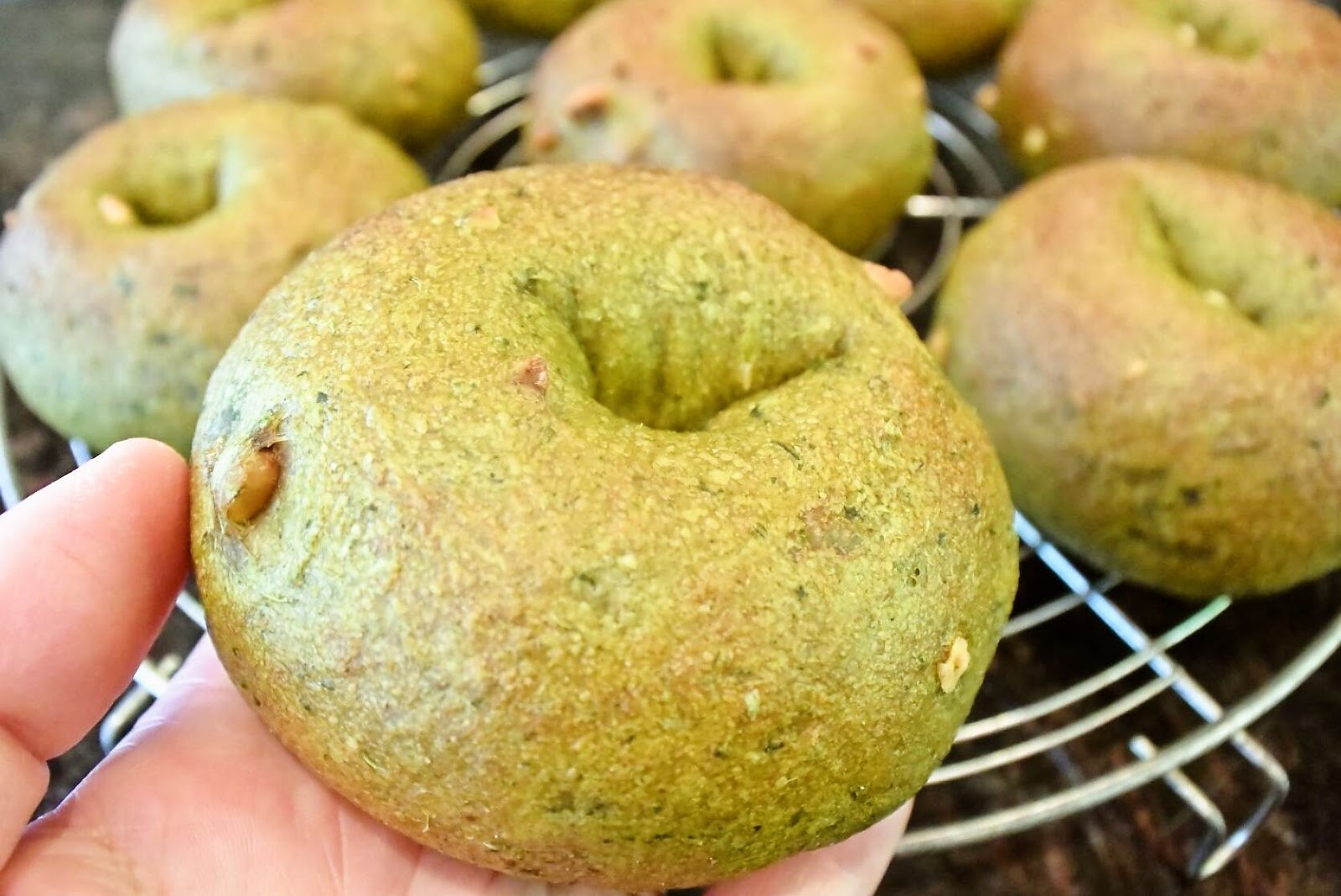
Keeru to kurumi no beeguru / kale and walnut bagels

One of our bagels takes advantage of kale for a deeper flavor, which is especially noticeable when toasted, while toasting also intensifies the crunch of walnuts.


This is a variation based on a plain version I adapted from ChefSteps (Amazing Chewy Bagels From Scratch). In my adaptation, shiokoji salted rice malt to lower sodium content also conditions the dough, making it softer and triggering a Maillard reaction due to its enzymes. For this reason, I do not use diastatic malt powder, which the original recipe lists as a key ingredient, but I do use non-diastatic malt powder for flavoring. Yet considering kale's effect of making the dough taste slightly "earthy and green," non-diastatic malt powder may not be needed at all in the recipe below. Until I experiment further, this is what appears at our table. These are smallish bagels packed with flavor.

1 bagel (1/8 recipe; 74 g baked):
219 calories; 6.8 g protein; 4.3 g fat; 37.7 g carbohydrate; 34.8 g net carbs; 93 mg sodium; 0 mg cholesterol; 2.9 g fiber

2018-07-19

Kurumafu no katsu / gluten cake cutlets

Tasty, filling yet light cutlets made with gluten cakes. Compared to more commonly known tonkatsu pork cutlets, this dish is much lower in calories and gentler on your stomach. Gluten cakes are first flavored with dashi stock, shoyukoji soy sauce rice malt and vinegar to get a meaty taste, followed by usual preparation of cutlets, but in a leaner way (below). No shoyukoji available? Balsamic vinegar does a great job in that case.


1/2 of recipe (katsu only; sauce & vegetables not included):
222 calories; 7.9 g protein; 13.0 g fat; 17.3 g carbohydrate; 11.8 g net carbs; 67 mg sodium (with shoyukoji made with 50% reduced-sodium soy sauce); 53 mg cholesterol; 5.5 g fiber; 288 mg potassium

1/2 of recipe (katsu & sauce; vegetables not included):
228 calories; 7.9 g protein; 13.1 g fat; 18.7 g carbohydrate; 13.2 g net carbs; 163 mg sodium (with shoyukoji made with 50% reduced-sodium soy sauce); 53 mg cholesterol; 5.5 g fiber; 298 mg potassium

2018-07-04

Ebi to kabu no misoshiru / miso soup with shrimp and Japanese turnip

This very gentle yet full-flavored miso soup features our local coon shrimp -- baby-size botan ebi spot shrimp -- and kabu turnip. Sweet Saikyo white miso is used for maximum tenderness, which is countered by the nostril-clearing sensation of karashi mustard.


1/2 of recipe:
73 calories; 8.2 g protein; 1.0 g fat; 4.8 g carbohydrate; 3.5 g net carbs; 338 mg sodium; 46 mg cholesterol; 1.3 g fiber; 287 mg potassium

2018-05-14

Shoyu raamen / ramen with soy sauce flavored soup

One of the standard ramen noodle variations in Japan comes with soy sauce flavored broth. Here is a tasty example topped with asparagus and eringi saute for spring and early summer. A combination of homemade chicken stock with a soft ginger aroma and niboshi-kobu-shiitake dashi (dried young sardine, kelp & dried shiitake stock) provides a flavorful underlying tone.


Proportion of seasonings was figured out backwards, starting from total sodium figures and the salt level needed to ensure tasty results, and it did work like magic after several trials and adjustment. Once you get the right proportion of seasonings, this is pretty simple to make and satisfies your taste buds.


1/2 of recipe:
427 calories; 18.2 g protein; 5.9 g fat; 74.7 g carbohydrate; 8.4 g net carbs; 500 mg sodium (with koikuchi shoyu regular soy sauce & shoyukoji made with 50% reduced-sodium soy sauce); 27 mg cholesterol; 5.3 g fiber; 450 mg potassium

2018-04-21

Miso yasai raamen / vegetable ramen noodles with miso-flavored soup

Finally, a sodium-savvy ramen with plenty of vegetables and great-tasting soup! More toppings mean more soup going into your mouth, especially when toppings are cut or sliced into small sizes, as a greater surface area is likely to carry more soup into your mouth. So for a reduced-sodium version, having lots of toppings is counter-intuitive, yet we opted for julienned vegetables for the extra flavor they add.


After being on a reduced-sodium diet for more than three and a half years, this is quite salty for us and definitely tasty. The recipe below is at the low end of the sodium content spectrum (soup has a salt level of 0.8% whereas soup at ramen shops averages 1.5%). Feel free to add more seasonings to taste, at your own risk ...


1/2 of recipe (approx. half of soup left in bowl): 
515 calories; 17.0 g protein; 9.3 g fat; 88.1 g carbohydrate; 15.8 g net carbs; 781 mg sodium* (with reduced-sodium miso and shoyukoji made with 50% reduced-sodium soy sauce); 11 mg cholesterol; 7.5 g fiber; 706 mg potassium 
*Stir-fried vegetable toppings alone contain 100 mg sodium per serving.

2018-03-15

Chawanmushi / steamed savory custard

Heavenly soft custard that quickly disappears on your tongue after releasing its umami-packed flavor. When serving only a small number of people, chawanmushi is easy to make in a regular pot or deeper pan with lid. Finishing with a smooth surface and no obvious holes is the sign of extra silky texture; for this, cook at low heat once water starts to bubble and the pot is filled with steam! While all solid ingredients can be immersed in the egg-dashi mixture, shrimp is placed after custard has basically solidified so that it stays on top along with mitsuba leaves and yuzu peel, the aromatic garnishes.


1/2 of recipe:
66 calories; 7.7 g protein; 2.7 g fat; 2.2 g carbohydrate; 1.8 g net carbs; 210 mg sodium; 125 mg cholesterol; 0.4 g fiber

2018-02-21

Mineoka-dofu / Mineoka-tofu / milk kudzu pudding

Often made today with cream and sugar as a dessert, this milk pudding originally was improvised as a quasi-tofu dish about 300 years ago when the Shogun, during a visit to the pastures of Mineoka, simply mentioned his desire to eat tofu. Upon hearing the Shogun's words, a cook accompanying the Shogun made the pudding using cow's milk and kudzu found at the pastures. Traditionally, milk is the only dairy ingredient that goes into the pudding; I mixed it with additive-free tonyu soy milk to cut back on sodium in the recipe below. This pudding contains no sweetener, but its milky taste and creamy texture are quite gratifying.      


1 serving (1/4 of Mineoka-dofu recipe, 1/2 of sauce recipe, shrimp & arugula):
113 calories; 5.7 g protein; 5.3 g fat; 10.8 g carbohydrate; 9.9 g net carbs; 105 mg sodium; 19 mg cholesterol; 0.9 g fiber

Whole recipe of Mineoka-dofu only:
388 calories; 14.4 g protein; 20.6 g fat; 37.8 g carbohydrate; 10.8 g net carbs; 85 mg sodium; 24 mg cholesterol; 2.4 g fiber

2018-02-11

Ebi no nikogori suigyoza / shrimp shui jiao dumplings

Delightful and tasty dumplings featuring shrimp. I used to use coconut oil as a pork fat substitute, but I could not fully get used to its clingy taste. Other oil or fat seemed to lack something. Then I realized that juiciness does not have to come from fat or oil. For example, with xiao long bao steamed soup buns/dumplings, the juiciness of the filling comes from the soup. Below I applied the technique of making nikogori jelly with the water used to rehydrate dried scallops, and mixed it in with the shrimp filling.


1/2 recipe (dumplings only; yu choy sum on top and dipping sauce not included):
251 calories; 15.0 g protein; 2.1 g fat; 40.3 g carbohydrate; 38.2 g net carbs; 149 mg sodium; 80 mg cholesterol; 2.1 g fiber

2017-08-29

Tosho chaamen / dao xiao chao mian / fried hand-shaven noodles

A cheater version of hand-shaven noodles made with a peeler, and stir fried with an assortment of goodies. Noodle dough is basically the same as teuchi udon handmade wheat noodles but uses less water, which makes the dough prep a bit more time consuming (dry and wet ingredients need to rest together longer before kneading). Less water in turn ensures easy shaving and cooking at the end. While any goodie works great in this noodle dish, dried shiitake mushrooms with their deep flavor and aroma function like underlying seasoning to bind everything together. Very tasty and satisfying.


1/2 recipe: 
596 calories; 26.6 g protein; 15.0 g fat; 85.8 g carbohydrate; 73.1 g net carbs; 595 mg sodium (with 50% reduced-sodium soy sauce and shoyukoji made with 50% reduced-sodium soy sauce); 226 mg cholesterol; 6.1 g fiber

2017-07-22

Pootabera no piza pan / portabella pizza pastry

A spin-off from a piroshki-style savory pastry creation. Replacement of all whole wheat flour with oat flour and butter with olive oil for the dough results in a lighter and crispier crust, which can be half-baked and frozen for later use. Below, umami-packed tomato paste is used as an instant sauce, providing a tasty base for sauteed portabellas complimented by aromatic Gorgonzola and crunchy walnuts. Great for a lunch or snack.


1 pastry (1/10 pizza pastry dough recipe and 1/4 of topping recipe):
254 calories; 10.3 g protein; 13.0 g fat; 25.4 g carbohydrate; 21.0 g net carbs; 69 mg sodium; 6 mg cholesterol; 4.4 g fiber

1 pizza crust (1/10 dough recipe):
186 calories; 7.3 g protein; 7.7 g fat; 21.6 g carbohydrate; 18.1 g net carbs; 23 mg sodium; 2 mg cholesterol; 3.5 g fiber

2017-02-10

Tomuyamukun / tom yum goong

Here is the tom yum goong I longed for. I finally was able to make this simple soup that indeed reminds me of what I routinely had from a locally popular Isan restaurant near my apartment in Bangkok. There is no secret. As with any cuisine, all you need is good ingredients. What I learned from my trials and errors over the years is not to add too much of aromatic ingredients and make a good stock.


1/4 of recipe:
111 calories; 14.9 g protein; 2.0 g fat; 10.3 g carbohydrate; 8.1 g net carbs; 427 mg sodium; 93 mg cholesterol; 2.3 g fiber

2016-06-11

Saba no oshizushi / pressed sushi with grilled mackerel

A specialty sushi from the eastern part of Toyama Prefecture. This sushi appeared at gatherings of relatives at the house of my grandmother on my mother's side in Urayama (Unazuki). We would all get together for mid-summer obon to welcome ancestors as well as to attend spring and fall ennichi festivals at the local shrine. In my mind's eye, I can see my grandmother and aunties working in the large, earthen floor kitchen, chattering away and laughing against the sounds of running water, chopping vegetables and steaming pots, with indulgent smells filling the air. There, they used several huge wooden molds to make hundreds of sushi to feed dozens of people during their stay at the house and to take home. My mom, the youngest of her siblings, claims that gently breaking up grilled mackerel was her role in the sushi making, but she is not in my picture ...

I have a clear visual recollection of me holding a piece of sushi with vivid green sansho leaves. After my grandmother's health deteriorated and we began buying this type of sushi from shops, sansho was always missing, and needless to say there were differences in taste and texture. It was still home style, but certainly not what my family was familiar with.

Because of the big operation I used to see at grandmother's kitchen, I had long thought making this sushi would be too much work. But when I finally made a satisfactory one, it was surprisingly easy -- why couldn't I make this before?

As with masuzushi pressed salmon sushi, making this -- especially mackerel prep and pressing after assembly -- takes a bit of time. It tastes better the next day, too, so plan ahead.


Whole recipe: 1,212 calories; 32.9 g protein; 28.9 g fat; 187.9 g carbohydrate; 185.4 g net carbs; 443 mg sodium (with shiokoji salted rice malt for sushi rice); 69 mg cholesterol; 2.5 g fiber

1/9 cut: 135 calories; 3.7 g protein; 3.2 g fat; 20.9 g carbohydrate; 20.6 g net carbs; 49 mg sodium (with shiokoji salted rice malt for sushi rice); 69 mg cholesterol; 2.5 g fiber

2016-02-03

Oden (genen) / fishcake, tofu and root vegetable stew (reduced-sodium version)

An unbeatable comfort food in cold seasons! The original version had the major drawback of being loaded with sodium, but the dish is finally ready to be re-introduced at our table. Major differences are making the dashi stronger by additionally using niboshi young dried sardines for a powerful base, reducing the amount of sake, desalinating fishcakes, using reduced-sodium soy sauce, and partially replacing soy sauce with rice vinegar as well as substituting shiokoji salted rice malt for some salt. Each change may be minor, but the outcome is surprisingly low in sodium and of course very tasty!


535 calories (1/4 of recipe); 34.4 g protein; 28.7 g fat; 38.9g carbohydrate; 31.4 g net carbs; 282 mg sodium (with 50% reduced-sodium soy sauce); 286 mg cholesterol; 7.5 g fiber

2015-09-18

Petoraaru karei to edamame no myoga-mushi-zushi / steamed sushi with petrale sole and edamame, wrapped in myoga ginger leaves

If you have access to fresh myoga leaves, try them as wrappers. A somewhat intense, refreshing aroma stimulates your senses as you unwrap packets at the table. Below is an example with steamed sushi.


1 packet:
114 calories; 6.0 g protein; 0.8 g fat; 19.3 g carbohydrate; 18.9 g net carbs; 59 mg sodium (with sushizu made with shiokoji & ponzujoyu made with 50% reduced-sodium soy sauce; 210 mg with store-bought sushizu & ponzujoyu); 10 mg cholesterol; 0.4 g fiber

2015-09-09

Okara to kinoko-iri kabocha no korokke / pumpkin croquettes with soybean pulp and mushrooms

Savory and sweet pumpkin croquettes. Sauteed enoki and eringi mushrooms are added for a slightly earthy, deep taste and aroma, which nicely disguises the low sodium content of the dish. The deep-fried version with crispy panko bread crumbs is quite satisfying even when eating only one or two pieces. The baked version tastes light and significantly cuts down the amount of oil and calories. The baked version involves a bit of a process to prepare panko, but it can be done ahead of time.


Deep-fried version (1/2 of recipe):
391 calories; 6.5 g protein; 26.4 g fat; 32.9 g carbohydrate;  25.0 g net carbs; 90 mg sodium (with shoyukoji made with 50% reduced-sodium soy sauce); 27 mg cholesterol; 7.9 g fiber

Baked version (1/2 of recipe):
202 calories; 6.5 g protein; 6.0 g fat; 32.9 g carbohydrate; 25.0 g net carbs; 90 mg sodium (with shoyukoji made with 50% reduced-sodium soy sauce); 27 mg cholesterol; 7.9 g fiber

2015-08-29

Masuzushi / pressed salmon sushi wrapped with bamboo leaves

A specialty of Toyama, my hometown prefecture, this pressed sushi with masu salmon is wrapped in bamboo leaves and comes in a magewappa round wooden container. It has also been a favorite ekiben (lit. train station bento) of Toyama since 1912, and is a popular souvenir with tourists and business travelers. Masuzushi is traditionally made with sakura masu (Oncorhynchus masou) that come back to the main river running through the prefecture to the Sea of Japan, and more than a dozen long-established masuzushi specialty shops are found near the river off the city center even today. Each shop's masuzushi has slightly different characteristics, and many locals have their favorite shop. Salmon is first treated with salt and then sugar and vinegar, and finally assembled with sushi rice and bamboo leaves. Yet the sushi is not ready for consumption at this point, as it must be pressed for hours to achieve the delicate blend of taste, aroma and texture.

The recipe below is my most successful attempt so far to recreate the masuzushi from a shop I like in Toyama. I use a stainless flour sifter and pie mold bottom as a magewappa substitute, and dried bamboo leaves for chimaki zongzi as a substitute for fresh bamboo leaves.


Whole recipe: 
1,139 calories; 58.5 g protein; 10.4 g fat; 187.0 g carbohydrate; 185.5 g net carbs; 354 mg sodium (with shiokoji salted rice malt for sushi rice; 674 mg with kosher salt for sushi rice); 99 mg cholesterol; 1.5 g fiber

1/4 of recipe:
285 calories; 14.6 g protein; 2.6 g fat; 46.7 g carbohydrate; 46.3 g net carbs; 88 mg sodium (with shiokoji salted rice malt for sushi rice; 169 mg with kosher salt for sushi rice); 25 mg cholesterol; 0.4 g fiber

2015-08-16

Ebi to okura, myoga no kakiage / mixed tempura with shrimp, okra and myoga ginger buds

A summery marriage of salty sweet shrimp, green okra and refreshing myoga ginger buds! Squeeze lemon over for a light, zesty finish. As deep-frying softens the sharp tang of myoga, this can be a good introductory dish for those who have hesitated to try the spicy little vegetable.


1/2 of recipe:
170 calories; 8.2 g protein; 10.5 g fat; 9.3 g carbohydrate; 7.8 g net carbs; 59 mg sodium; 62 mg cholesterol; 1.5 g fiber

2015-07-16

Takoyaki / fried octopus dumplings (calamari version)

Served with an aromatic, sweet and salty sauce that blends with the savory and still creamy batter inside, these little dumplings are everyone's favorite. Takoyaki used to be something from neighborhood mom & pop shops, which often had small eat-in areas but largely sold takoyaki as a takeout item. At my local takoyaki shop, a couple of coins were enough to buy a small tray with several takoyaki, which was affordable with my pocket money -- basically change I collected from buying stationery or books -- as a child. Buying a large tray with 12 takoyaki required some help from parents or relatives, and I always dreamed about getting a large tray with 12 takoyaki and eating them all myself. When this dream came true I was so happy, but also uncomfortably full and feeling guilty about not sharing them with my sister.

The recipe below features calamari as a more widely available substitute for octopus.


Whole recipe (about 24 takoyaki balls):
902 calories; 44.8 g protein; 19.0 g fat; 117.2 g carbohydrate; 112.6 g net carbs; 862 mg sodium (with 50% reduced-sodium soy sauce); 734 mg cholesterol; 4.6 g fiber

1/2 of recipe (about 12 takoyaki balls):
451 calories; 22.4 g protein; 9.5 g fat; 58.6g carbohydrate; 56.3 g net carbs; 431 mg sodium (with 50% reduced-sodium soy sauce); 367 mg cholesterol; 2.3 g fiber

2015-05-22

Suponji keeki / sponge cake (genoise)

Indispensable for a number of Western-style cakes, including layered cake with fruits and fresh cream, framboise or raspberry mousse cake, baked chocolate or chocolate mousse cakes, Mont Blanc, baked & unbaked cheesecakes, matcha green tea cake, etc. Key ingredients are as simple as flour, eggs and sugar. Below I replace some all-purpose flour with potato starch, and add some maple syrup, butter and milk to increase the cake's soft and delicate texture and moist finish.


Whole cake (18 cm mold): 
1135 calories; 27.2 g protein; 43.2 g fat; 154.6 g carbohydrate; 152.4 g net carbs; 231 mg sodium; 713 mg cholesterol; 2.2 g fiber